• About us
  • Contact us
  • Our team
  • Terms of Service
Thursday, January 29, 2026
Kashmir Images - Latest News Update
Epaper
  • TOP NEWS
  • CITY & TOWNS
  • LOCAL
  • BUSINESS
  • NATION
  • WORLD
  • SPORTS
  • OPINION
    • EDITORIAL
    • ON HERITAGE
    • CREATIVE BEATS
    • INTERALIA
    • WIDE ANGLE
    • OTHER VIEW
    • ART SPACE
  • Photo Gallery
  • CARTOON
  • EPAPER
No Result
View All Result
Kashmir Images - Latest News Update
No Result
View All Result
Home OTHER VIEW

The Lens of Bias: Why a BMW Bike Overshadowed a Diplomatic Mission

Upendra Kaul by Upendra Kaul
January 2, 2026
in OTHER VIEW
A A
0
The Lens of Bias: Why a BMW Bike Overshadowed a Diplomatic Mission
FacebookTwitterWhatsapp

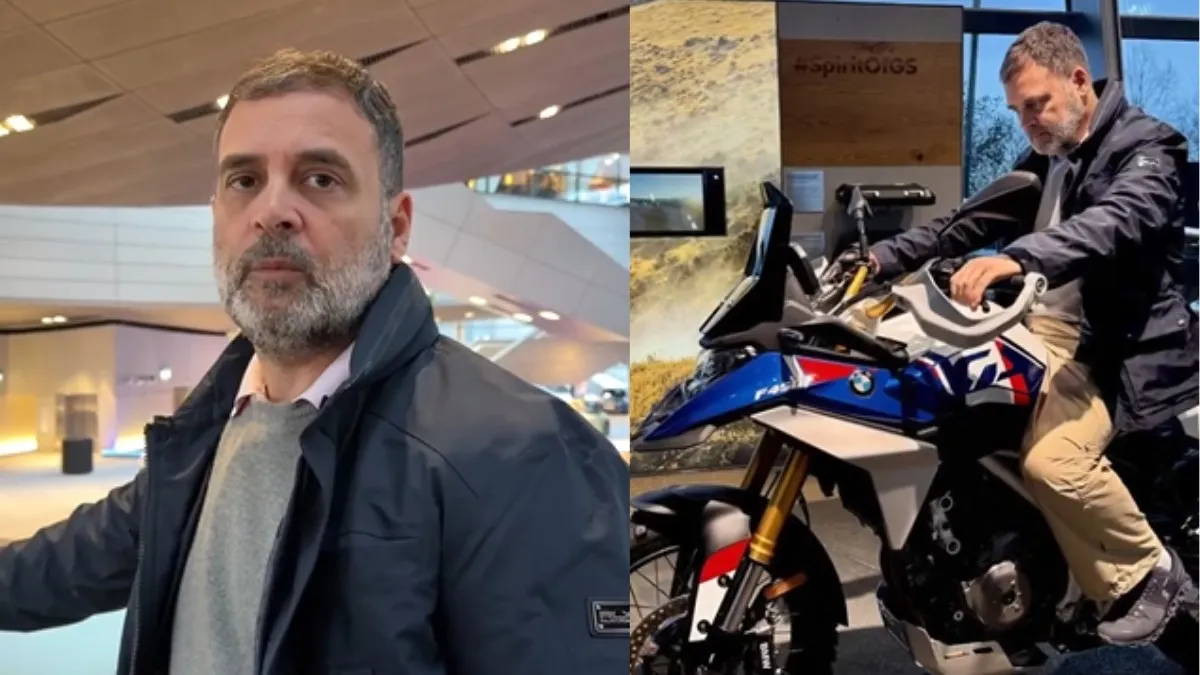
The recent visit by Rahul Gandhi to Germany (December 2025) has indeed been a lightning rod for debate, and the “BMW motorbike” footage is a perfect example of how a single image can be framed in two entirely different ways. Here is a breakdown of the facts regarding that visit and the context of the media coverage:

The visit to the BMW plant and “BMW Welt” in Munich was focused on industrial learning. Gandhi specifically highlighted a 450cc motorcycle (the BMW F 450 GS) that was developed in partnership with India’s well known TVS Motor Company and not a joy ride as was focussed by our media. He used the visit to argue that India needs to strengthen its manufacturing ecosystem to create high-quality jobs, noting that seeing the “Indian flag flying” at a world-class facility in Germany was a proud moment for Indian engineering.

More News

Global Media and Leaders Hail India–EU FTA

Governance Without Gridlock: India’s Institutional Architecture for Infrastructure

The Human–AI Classroom: What Really Changed by 2026

Load More

Beyond the factory tour, his 5-day visit (December 15–20, 2025) included several high-level political meetings which included a lunch discussion with the former Chancellor Olaf Scholz and also met with Carsten Schneider, the German Minister for Environment and Climate Protection, to discuss climate change. He addressed students and scholars at the Hertie School in Berlin, where his speech, “Politics is the art of listening,” focused on democratic accountability and the global importance of the Indian democratic experiment.

The criticism regarding his absence from Parliament stems from the fact that his trip overlapped with the winter session (which ended on December 19). Critics labelled him a “Leader of Tourism,” arguing that the Leader of the Opposition should be present for House debates. However, the supporters, including Priyanka Gandhi, pointed out that Prime Minister Narendra Modi was also traveling during this period (visiting Jordan, Ethiopia, and Oman from Dec 15–18, 2025). They argue that if the PM can travel for state business during a session, the Leader of Opposition should also be able to engage in global outreach.

In the age of social media, complex discussions about “manufacturing ecosystems” or “democratic structures” often get overshadowed by “viral” moments. A video of a politician on a sleek BMW bike is easier to package as “lifestyle” or “vacation” content than a 45-minute lecture on institutional framework. This creates a disconnect between the substance of the trip and its media representation.

The writer is Founder Director at Gauri Kaul foundation

Previous Post

NEW YEAR, OLD FIGHT

Next Post

From Confiscatory Taxes to Citizen-Centric Reform: India’s 2025 Tax Turning Point

Upendra Kaul

Upendra Kaul

Related Posts

Global Media and Leaders Hail India–EU FTA

Regional-bilateral significance of Nepal PM Dahal’s India visit
January 29, 2026

The conclusion of the India–EU Free Trade Agreement has drawn strong and positive reactions globally, cutting across international media, foreign...

Read moreDetails

Governance Without Gridlock: India’s Institutional Architecture for Infrastructure

Regional-bilateral significance of Nepal PM Dahal’s India visit
January 28, 2026

Since Independence, infrastructure has shaped India’s idea of progress. The vision was clear: railways would bind distant regions, highways would...

Read moreDetails

The Human–AI Classroom: What Really Changed by 2026

Regional-bilateral significance of Nepal PM Dahal’s India visit
January 27, 2026

In most classrooms across India—and perhaps more tellingly, in Jammu and Kashmir—the arrival of Artificial Intelligence did not announce itself...

Read moreDetails

The Republic beyond the Parade

Regional-bilateral significance of Nepal PM Dahal’s India visit
January 26, 2026

Every year on Republic Day, India remembers an important moment in its history, 26 January 1950, when our country adopted...

Read moreDetails

India at 77: The Constitutional Promises of the Republic

Regional-bilateral significance of Nepal PM Dahal’s India visit
January 26, 2026

As India celebrates its 77th Republic Day, the occasion invites reflection not only on ceremonial grandeur but on the deeper...

Read moreDetails

Fisheries Resource in Kashmir: The Socio-Ecological Perspective

Regional-bilateral significance of Nepal PM Dahal’s India visit
January 24, 2026

    Historically, fisheries in Kashmir have been approached through a utilitarian lens emphasizing harvest optimization, stock enhancement and livelihood...

Read moreDetails
Next Post
Honest, consistent taxpayers to be feted by govt; policy proposal in works

From Confiscatory Taxes to Citizen-Centric Reform: India’s 2025 Tax Turning Point

  • About us
  • Contact us
  • Our team
  • Terms of Service
E-Mailus: kashmirimages123@gmail.com

© 2025 Kashmir Images - Designed by GITS.

No Result
View All Result
  • TOP NEWS
  • CITY & TOWNS
  • LOCAL
  • BUSINESS
  • NATION
  • WORLD
  • SPORTS
  • OPINION
    • EDITORIAL
    • ON HERITAGE
    • CREATIVE BEATS
    • INTERALIA
    • WIDE ANGLE
    • OTHER VIEW
    • ART SPACE
  • Photo Gallery
  • CARTOON
  • EPAPER

© 2025 Kashmir Images - Designed by GITS.