Deputy PM admits Nur Khan airbase was attacked in May
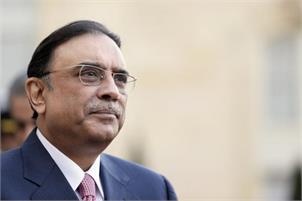
Lahore: Pakistan President Asif Ali Zardari has revealed that he was advised to “hide in a bunker” when India launched Operation Sindoor in May this year.
Zardari made the revelation while speaking at an event in Larkana, Sindh province, to mark the 18th death anniversary of his wife and former prime minister Benazir Bhutto, who was assassinated in a gun and bomb attack in Rawalpindi on December 27, 2007.
“My MS (Military Secretary) came to me and said, ‘Sir, the war has started.’ I had actually told him four days earlier that a war was going to happen. He said, ‘Sir, let’s go to a bunker (being a safe place)’… I said, ‘if martyrdom is to come, it will come here. Leaders don’t die in bunkers. They die on the battlefield. They don’t die sitting in bunkers,” he said on Saturday.
“Pakistan desires peace but remains fully prepared to defend itself,” Zardari said, while making claims about what he called Pakistan’s “decisive stance” during the four-day conflict.
President Zardari also praised Army chief Asim Munir for what he called a “befitting reply to India” in the armed conflict in May.
The Pakistan Peoples Party (PPP) top leader claimed that the international community is now acknowledging Pakistan’s stance and even US President Donald Trump had praised Munir.
He also claimed that it was PPP that made Munir the Field Marshal. “We, the PPP, made Gen Munir Field Marshal,” he said.
Meanwhile, Pakistan’s Deputy Prime Minister Ishaq Dar has admitted that India attacked its Nur Khan airbase in the early hours of May 10, in possibly a first-time admission eight months after the four-day armed conflict between the two countries.
Dar also said that Islamabad did not request mediation between Pakistan and India during the May conflict, but claimed that US Secretary of State Marco Rubio and Saudi Foreign Minister Prince Faisal bin Farhan expressed a desire to speak with New Delhi.
India launched Operation Sindoor on May 07, targeting “terror infrastructure in Pakistan and Pakistan-occupied Kashmir” in retaliation for the Pahalgam attack that killed 26 civilians.
The strikes triggered four days of intense clashes between the two countries and ended with an understanding to stop the military actions on May 10.
“As many as 79 of 80 drones sent by India were intercepted within 36 hours. India then made the mistake of attacking the Nur Khan Airbase in the early hours of May 10, prompting Pakistan’s retaliatory operation,” Dar, who is also the foreign minister, said while outlining Pakistan’s diplomatic engagements in 2025.
Dar said that on May 10, US Secretary of State Rubio called him at around 8.17 am, in which he conveyed that India was ready for a ceasefire and asked whether Pakistan would agree. “I said we never wanted to go to war,” Dar added.
He further said Saudi Foreign Minister Prince Faisal later contacted him seeking permission to speak with India and “subsequently confirmed that a ceasefire had been agreed.”
Dar also claimed that Pakistan shot down seven Indian jets during the May 07 air battle, without providing any evidence in support of his claims.
The minister reiterated Pakistan’s position that lasting peace in the region is linked to a resolution of the Jammu and Kashmir dispute.