

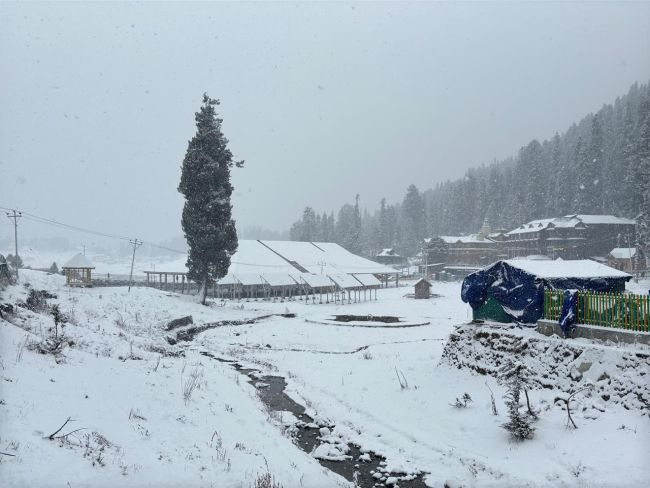
As winter tightens its grip across Jammu and Kashmir, the Valley is once again undergoing its familiar seasonal transformation. Mornings now break through dense layers of fog, evenings descend sooner than expected, and the air carries a biting chill that signals the onset of harsher cold. Fresh snowfall in the upper reaches of Gulmarg, Sonamarg, and Gurez has turned the landscape white, while frost settling on rooftops and orchards has become part of everyday life. This seasonal shift is not merely atmospheric; it marks the return of a crucial phase that has long shaped Kashmir’s economy, culture, and collective rhythm.
Winter has traditionally been a season of anticipation for the region. While the cold complicates daily life, it also triggers a steady inflow of visitors eager to experience Kashmir at its most dramatic and tranquil. After the disruption caused by the pandemic and intermittent security concerns, tourism in the Valley has shown notable resilience. Between 2019 and 2024, Kashmir recorded more than nine million tourist arrivals, reflecting a strong recovery and renewed interest in its natural and cultural offerings. In 2024 alone, arrivals neared three million, restoring confidence among local stakeholders who depend heavily on tourism for their livelihoods.
This winter has begun on a cautiously optimistic note. Early snowfall has lifted sentiment across the tourism sector, particularly in Gulmarg, where fresh snow on the Apharwat slopes has rekindled enthusiasm among ski operators and hoteliers. Bookings for December and January have picked up steadily in Srinagar, Tangmarg, Gulmarg, and Pahalgam, suggesting that winter tourism is gradually regaining its pre-pandemic momentum. Gulmarg, one of South Asia’s premier skiing destinations, continues to anchor Kashmir’s winter tourism economy, drawing both domestic visitors and international travellers from Europe, Central Asia, and the Middle East. For many tourists, the promise of timely snowfall is a decisive factor, and this year’s early winter conditions have strengthened that confidence.
Beyond Gulmarg, Srinagar presents a quieter but equally compelling winter experience. Dal Lake, partially frozen in the early hours, mirrors the subdued colours of the season. Houseboats, heated with traditional bukharis and decorated with Kashmiri furnishings, offer a distinctive winter stay that blends comfort with heritage. The old city neighbourhoods of Hazratbal, Rainawari, Khanyar, and Zaina Kadal come alive with the aroma of winter delicacies, particularly harissa prepared before dawn. The slower pace of life—marked by warm tea, woollen pherans, and the glow of the kangri—creates an immersive cultural atmosphere that many visitors find deeply appealing.
Pahalgam, is gradually regaining its footing as the snow-covered meadows and pine-lined slopes are once again attracting families and leisure travellers seeking a calm winter retreat. Enhanced security arrangements, improved road maintenance, and renewed promotional efforts have helped restore confidence among visitors. Horse rides, winter walks, and short snow excursions have re-emerged as key attractions, particularly during the early winter phase before heavy snowfall limits access.
Other destinations traditionally associated with summer tourism are also finding a place in Kashmir’s winter circuit. Sonamarg continues to draw visitors before peak snowfall restricts movement, while Yusmarg, Doodhpathri, Bangus Valley, and Gurez are gaining attention as offbeat winter destinations. Improved road connectivity and the growth of rural homestays have played a critical role in this shift. These quieter locations, often showcased through social media, appeal to travellers seeking less crowded experiences marked by frozen streams, snow-laden meadows, and village life adapted to winter conditions.
The economic significance of winter tourism remains substantial. Thousands of people—including taxi drivers, ski instructors, guides, artisans, porters, pony operators, and small shopkeepers—rely on the season for income. The expansion of homestays and boutique lodges in rural and semi-urban areas has helped spread tourism benefits beyond traditional hubs. Demand for Kashmiri handicrafts also rises during winter, particularly for pashmina shawls, carpets, wooden carvings, and papier-mâché items, providing artisans with a valuable seasonal market.
Recognising the importance of winter tourism, government agencies have intensified preparations ahead of anticipated heavy snowfall. Snow-clearance machinery has been deployed across vulnerable routes, coordination between tourism and disaster management authorities has been strengthened, and safety measures in high-altitude areas have been reinforced. In Gulmarg, efforts are focused on slope safety, upgraded first-aid facilities, and crowd regulation around the Gondola. Srinagar International Airport has improved its winter operational systems, including visibility aids and flight scheduling, to accommodate increased seasonal traffic.
Despite these measures, winter remains inherently unpredictable. Heavy snowfall, while essential for tourism, can disrupt connectivity through flight delays, road closures, and temporary power outages. The Srinagar–Jammu National Highway continues to be a critical vulnerability, often affected by landslides and snow accumulation. Local tourism operators repeatedly stress the need for stronger contingency planning, alternative routes, and real-time communication systems to minimise disruption for visitors.
Alongside logistical concerns, environmental sustainability has emerged as a growing challenge. Rising tourist numbers increase pressure on fragile ecosystems, particularly in high-altitude meadows and forested valleys. Waste management becomes especially difficult during peak snowfall, and unregulated construction in scenic areas has raised concerns about long-term ecological damage. Experts advocate a more balanced tourism model that prioritises energy-efficient infrastructure, responsible construction practices, and environmentally sensitive adventure tourism.
As Kashmir moves deeper into winter, the prevailing mood is one of cautious optimism. Strong booking trends, broader destination interest, and improved preparedness suggest that the Valley is entering a new phase in its winter tourism narrative. From adventure sports in Gulmarg to cultural immersion in Srinagar and quiet retreats in emerging destinations, winter tourism now offers a diverse range of experiences.
For local communities, winter continues to represent both hardship and opportunity. While the season tests daily resilience, it also opens vital economic avenues. For visitors, Kashmir in winter offers a rare experience within the subcontinent—silent landscapes softened by snow, frozen lakes reflecting muted skies, and a culture that finds warmth in tradition.
If snowfall patterns remain favourable and infrastructure and safety measures continue to improve, the winter of 2025–26 could emerge as one of the most rewarding seasons in recent years, reaffirming Kashmir’s enduring appeal as one of South Asia’s most captivating winter destinations.
The author is a senior analyst and can be mailed at m.hanief@gmail.com


