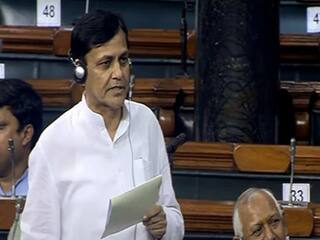
New Delhi: A private member’s bill, which seeks to allow employees not to entertain work-related calls and emails outside work hours, was introduced in Lok Sabha on Friday.
Lok Sabha and Rajya Sabha members are allowed to introduce bills on subjects on which they think the government should bring a law. Barring a few cases, most of the private member bills are withdrawn after government replies on the proposed law.
NCP MP Supriya Sule introduced the “Right to Disconnect Bill, 2025” which proposes to establish an employees’ welfare authority to confer the right on every employee to disconnect from work-related telephone calls and emails beyond work hours and on holidays.
The bill proposes the right to refuse to answer calls and emails outside work hours and for all matters connected therewith.
Another bill, Menstrual Benefits Bill, 2024, moved by Congress MP Kadiyam Kavya, proposes to provide certain facilities at the workplace to women employees during menstruation.
The bill seeks to lay down a legal framework to provide certain benefits to women in the workplace during the menstrual period.
Congress MP Manickam Tagore introduced a bill to exempt Tamil Nadu from the National Eligibility cum Entrance Test (NEET) for admission to undergraduate medical courses.
The Tamil Nadu government had last month moved the Supreme Court against the President’s refusal to grant assent to a proposed law which exempts the state from providing medical admissions through NEET.
DMK MP Kanimozhi Karunanidhi introduced a bill to abolish the death penalty in the country. There have been demands to abolish the death penalty in the country but successive governments at the Centre have rejected the view claiming it was necessary in certain cases as a deterrent.
Nearly a decade ago, the Law Commission had recommended swift abolition of the death penalty except in terror-related cases, noting it does not serve the penological goal of deterrence any more than life imprisonment.