Art has always been a dialogue between discipline and freedom—between the tangible precision of form and the boundless flow of emotion. For centuries, artists trained their eyes to observe structure and their hands to master figure. Yet, as art evolved, color began to speak a language of its own—one that needed no form to carry meaning.
In conventional art, the emphasis on form and figure has long stood at the heart of artistic training and visual language. Before the rise of abstraction and conceptual movements, mastery of form was regarded as the foundation of artistic excellence. Artists honed their ability to carve out form with color, shaping illusion and volume in ways that astonished the world.
As time moved forward, art—and artists themselves—rediscovered a more profound and liberated essence: a form of art that was, paradoxically, formless. It required more than conventional training; it demanded intuition, emotion, and surrender. In this new realm, color became the artist’s magic wand—no longer merely a tool of representation but a source of revelation.
Color is both an optical fact and an emotional truth, a bridge between what the eye perceives and what the soul feels. It possesses not only a physical presence but also a deep psychological resonance. It can soothe or disturb, calm or ignite, elevate or oppress. Within art, color becomes a language of feeling—a mode of emotional communication through which artists convey mood, rhythm, and spirit without uttering a single word.
Throughout history, artists across cultures and centuries have explored this mysterious power of color. From the earthy pigments of prehistoric caves to the radiant hues of Impressionist canvases, the story of color in art mirrors the evolution of human perception itself. Artists learned to make color interact with the viewer’s mind and spirit, weaving an invisible thread of connection between artwork and audience. A painter’s choice of red or blue, shadow or light, can evoke emotions deeper than narrative or form ever could.
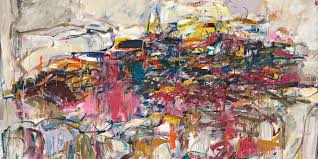
There were pivotal moments in art history when color transcended its descriptive role and became an independent force. In movements like Fauvism, Abstract Expressionism, and Color Field Painting, artists liberated color from the duty of representation. Figures dissolved, and forms lost their boundaries—yet the paintings spoke more vividly than ever. The works of Matisse, Rothko, and Kandinsky revealed that color alone could carry meaning, evoke spirituality, and generate profound aesthetic experience. In these canvases, form became secondary, while color transformed into pure energy—a vibration that entered directly into human consciousness.
To an artist, color is both science and soul. It obeys optical laws yet defies intellectual boundaries. It reflects light but also mirrors emotion. The harmony of colors can suggest music; their contrasts can evoke tension, conflict, or passion. Each hue holds its own psychology—the serenity of blue, the vitality of yellow, the warmth of red, the mystery of violet. Through these living tones, the artist composes a visual poetry that speaks in wavelengths rather than words.
Art has always been a dialogue between discipline and freedom—between the tangible precision of form and the boundless flow of emotion. For centuries, artists trained their eyes to observe structure and their hands to master figure. Yet, as art evolved, color began to speak a language of its own—one that needed no shape to carry meaning. In the hands of a true artist, color does not merely paint the world; it reveals it.