

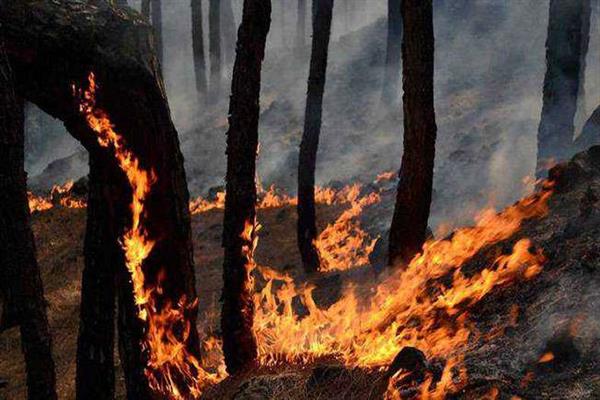
The progress of human civilization has always been possible only through harmony with nature. Trees, rivers, mountains, and forest greenery are not only vital for life but form the very foundation of Earth’s environmental balance. Among these, forests—often referred to as the “lungs” of the planet—absorb carbon dioxide and release life-giving oxygen. Forests help maintain air quality, regulate climate, preserve biodiversity, control the rainfall cycle, and sustain groundwater levels. However, it is unfortunate that today these very forests are battling for their survival. Forest fires, once considered part of natural cycles, have now become a devastating threat due to human activity. This crisis goes far beyond the loss of trees—its effects extend to the very lifelines of existence: air, water, and soil. Of particular concern is the pollution of water sources, a facet of this crisis that is discussed far less frequently, despite its extensive and dangerous consequences.
A recent international research study conducted by scientists in New York has confirmed that after a forest fire, nearby water bodies such as rivers, lakes, and ponds can remain polluted for years. Published in the prestigious international journal Nature Communications Earth & Environment, this study analyzed more than 100,000 water samples from over 500 rivers and lakes across the United States to determine how water quality changes after forest fires.
The study found that, following forest fires, the levels of nitrogen, organic matter, ash, sand, and soil in water significantly increase. Many of these substances are toxic to humans and exceed safe drinking water standards by several times. Even more alarming, the impact of these pollutants can last from one to eight years after the fire. These contaminants are carried into water bodies by rainfall, thereby severely affecting the entire aquatic ecosystem. Pollution in these water sources disrupts aquatic life—fish, insects, and aquatic plants—and has a cascading effect on local biodiversity. Moreover, this contaminated water poses serious health risks to humans.
India, with its vast geographical diversity, has about 21% of its land covered by forests. A large portion of these are dry forests, which have become increasingly vulnerable due to climate change and human intrusion. According to the Forest Survey of India, there were 212,249 forest fire incidents recorded in India during 2022–23. The most affected states include Odisha, Andhra Pradesh, Chhattisgarh, Madhya Pradesh, Maharashtra, Himachal Pradesh, and Uttarakhand.
Particularly vulnerable are the Himalayan regions, where steep slopes, low humidity, and highly flammable trees like pine make them prone to forest fires. Major Indian rivers—Ganga, Yamuna, Brahmaputra, and Sutlej—originate from these areas, providing water to millions of people. Hence, any decline in water quality in these regions due to forest fires becomes a national concern. Once water pollution begins in these mountainous areas, the steep terrain and fast-flowing rivers rapidly carry the pollutants downstream, potentially affecting entire river basins like the Ganga plain.
Scientists assert that the dramatic rise in forest fire incidents is largely due to rising global temperatures. In 2024 alone, forest fires affected over 400 million hectares globally and released 6.5 billion tons of carbon dioxide into the atmosphere—the highest on record. Studies further reveal that 95% of forest fires are human-caused. These fires often begin with carelessly discarded cigarettes, sparks from passing trains, or friction between dry tree branches. On a global scale, climate change, excessive use of fossil fuels, illegal logging, and human intrusion into forest areas have made these fires even more deadly. In recent years, irregular monsoons, reduced rainfall, and rising temperatures have left forests dry and extremely flammable. Dead twigs, leaves, and flammable trees like pine make the fires even more destructive.
Post-fire runoff contains nitrogen, phosphorus, chemicals, and organic matter that severely degrade water quality. Aquatic organisms such as fish, insects, moss, and algae are the first to suffer, disrupting the ecological chain. For humans, this water can cause waterborne diseases, skin disorders, digestive problems, and even cancer. The impact is especially severe in rural areas, where water purification systems are inadequate. Additionally, ash and toxic particles released into the atmosphere after a forest fire drastically worsen air quality. These particles linger in the air, increasing the risk of asthma, lung diseases, and eye irritation.
In a densely populated country like India, forest fires and the resulting water pollution present multi-layered challenges. Weak forest monitoring systems, lack of awareness and participation among communities living near forests, and the absence of regular water quality testing are significant concerns. Ignoring the local effects of global climate change and the lack of coordination between forest and water policies further worsens the crisis.
This crisis cannot be addressed by a single department or institution alone. A multi-tiered, coordinated approach is essential.
- Forest management and fire prevention:
Implement modern fire detection systems such as drones, satellites, and thermal imaging in forest areas. Conduct regular forest cleanups by removing dry branches and leaves. Train local villagers and forest dwellers in fire management.
- Protection of water sources:
Establish buffer zones around rivers, lakes, and ponds. Conduct regular water quality testing, especially after the monsoon season. Clean and restore polluted water bodies.
- Education and awareness:
Run awareness campaigns in schools, panchayats, and villages about forest fires and water pollution. Form Van Mitra (Friends of Forest) committees to involve locals.
- Strict enforcement of environmental laws:
Take strict action against unauthorized activities in forests. Make reforestation mandatory in fire-affected areas.
- Global cooperation:
India must play an active role on international platforms dealing with climate change. Share global experiences and resources to enhance forest conservation efforts.
Forest fires are no longer just isolated incidents of burning trees—they have become a global disaster impacting the environment, water, air, ecosystems, biodiversity, and human health. Their deep impact on water sources poses a grave threat to future generations. If we fail to take this seriously now, the crisis will become not only vast but irreversible. We must understand that forests and water are deeply interlinked—neither can survive without the other. Maintaining this balance is essential for the survival of humanity.
Therefore, what we urgently need are informed citizens, strong governance, and sensitive policies—ones that can control forest fires, protect water sources, and restore the Earth’s health.
The writer is Teacher, Elementary Education Department, Government of Rajasthan
Aleekhanbhaiya@gmail.com


