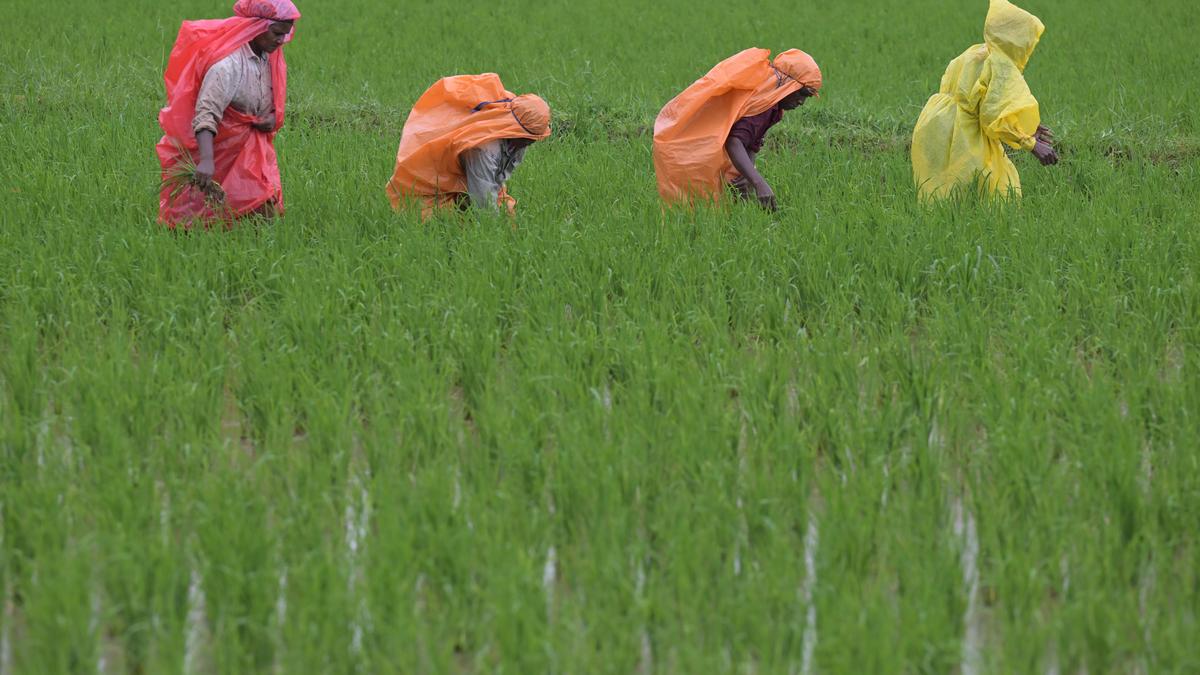
Welfare of farmers remains the top priority of the central government, as relentless efforts are being made to make farming easier, reduce production costs, and increase farmers’ profits. Transforming the lives of farmers and making agriculture a pillar of national prosperity is not just Prime Minister ShriNarendraModi’s goal – it is his unwavering resolve. Every decision, every reform under his leadership, places the farmer at the heart of India’s growth story. The recent revisions in GST rates are a shining reflection of this vision. The ‘Next Generation Reform in GST’, announced by the Prime Minister from the Red Fort on Independence Day, is now taking shape as the foundation of a new, self-reliant and prosperous India.
Keeping the interests of farmers and the common people foremost, the government has made sweeping reductions in GST rates – reforms that will energise India’s agricultural system and power the progress of farmers. These are not abstract changes in policy; they touch the very soil farmers till every day. Over 10 crore small and marginal farmers will benefit directly. Earlier, agricultural equipment attracted GST rates as high as 18%; now it has been slashed to just 5%, ensuring direct savings of thousands of rupees for every farmer.
Take the case of a farmer buying a 35-horsepower (HP) tractor. What once cost around ₹6.5 lakh will now be available for approximately ₹6.09 lakh – a saving of ₹41,000. For a 45 HP tractor, the saving is ₹45,000; for a 50 HP tractor, ₹53,000; and for a 75 HP tractor, ₹63,000. Even smaller machines are now within easier reach – a power tiller will cost around₹12,000 less, a paddy transplanter ₹15,000 less, and a thresher ₹14,000 less. Equipment like power weeders and seed drills are cheaper by ₹5,000-₹10,000. Larger machinery for harvesting and sowing – such as a 14-feet cutter bar, a square baler, or a straw reaper – will now save farmers ₹1.87 lakh, ₹94,000, and ₹22,000, respectively. Tools like mulchers, super seeders, happy seeders, and sprayers are also more affordable, bringing modernisation to every acre.
Mechanisation is no longer a luxury, it is a necessity for profitable farming. The tax cuts on sprinklers, drip irrigation systems, harvesters, hydraulic pumps, and spare parts will empower even small and marginal farmers to adopt modern tools. Labor costs will fall, time will be saved, and productivity will rise. While prices may vary slightly across states and companies, the overall result remains clear: farmers will spend less and earn more.
Every step we take is guided by the singular aim of farmer prosperity. I have personally met representatives of agricultural machinery manufacturers to ensure that these tax reductions translate into immediate benefits for farmers. But this reform extends beyond agriculture; it is a powerful push for the entire economy. Lower input costs will enable farmers to generate higher returns from their produce, in turn strengthening small and cottage industries. Cheaper raw materials will bring down production costs, boosting MSMEs and creating new employment opportunities.
Agriculture and animal husbandry are twin engines of the rural economy. The GST exemptions granted to beekeeping, dairy, animal husbandry, and cooperative societies will inject new energy into the countryside. When farmers’ expenses go down and their incomes rise, they will naturally invest more in education, healthcare, and better living standards. That is how rural India’s holistic development begins – not through handouts, but empowerment.
Prime Minister ShriNarendraModi has always emphasised organic and natural farming as the future of Indian agriculture. At a time when the world is moving toward sustainable cultivation and ecological balance, the government’s decision to reduce GST on bio-pesticides and micronutrients from 12% to 5% is both timely and visionary. It will encourage farmers to transition away from chemical fertilisers toward organic inputs. The results will be transformative – richer soil fertility, a healthier planet, and reduced costs of cultivation. Given that most Indian farms are small holdings, the government continues to promote integrated farming and allied activities to ensure sustained income growth.
Value addition is equally crucial. The GST reforms have provided a strong boost to the food processing industry. With more investment in cold storage and processing units, farmers will be able to preserve their produce longer and sell it at better prices. Prime Minister ShriNarendraModi has repeatedly assured that no policy or agreement will ever compromise the interests of farmers, fishermen, or livestock owners. These reforms stand as living proof of that commitment. They will also reduce India’s dependence on imports and give momentum to ‘Make in India’ and ‘AtmanirbharBharat’.
At the heart of rural prosperity are the women of self-help groups. GST reforms have reduced their operating costs, helping small-scale rural industries flourish. As new processing units, storage facilities, and transport networks emerge in villages, fresh avenues for entrepreneurship and employment will open up. Lower taxes will mean higher sales, new jobs, and a generation of youth empowered to become self-reliant in their own villages.
I am confident these reforms will realise our collective resolve of ‘Swadeshi se Samriddhi’ (prosperity through self-reliance), turning India’s economy into a truly “long-living economy”. These changes are not just about lowering tax rates; they represent a moral and economic commitment to reinvigorate the lives of farmers, small traders, animal rearers, fishermen, and women driving the rural enterprise. Guided by the spirit of ‘SabkaSaath, SabkaVikas’ and ‘Antyodaya’, our government continues to prove that the prosperity of farms and farmers is the true measure of the nation’s progress.
This Diwali, India will celebrate the festival with the theme of ‘Swadeshi se Samriddhi’ – lighting lamps of self-reliance in every home, echoing the chants of ‘Jai Swadeshi’, and moving confidently towards the vision of a ‘ViksitBharat’ under the leadership of Prime Minister Shri NarendraModi.
Courtesy PIB, Srinagar
(The author is the Union Minister for Agriculture, Farmers’ Welfare, and Rural Development, Government of India.)