• About us
  • Contact us
  • Our team
  • Terms of Service
Friday, January 9, 2026
Kashmir Images - Latest News Update
Epaper
  • TOP NEWS
  • CITY & TOWNS
  • LOCAL
  • BUSINESS
  • NATION
  • WORLD
  • SPORTS
  • OPINION
    • EDITORIAL
    • ON HERITAGE
    • CREATIVE BEATS
    • INTERALIA
    • WIDE ANGLE
    • OTHER VIEW
    • ART SPACE
  • Photo Gallery
  • CARTOON
  • EPAPER
No Result
View All Result
Kashmir Images - Latest News Update
No Result
View All Result
Home BUSINESS

Developed countries spent more on fossil fuel subsidies in 2023 than new climate finance package

Press Trust of india by Press Trust of india
December 19, 2024
in BUSINESS
A A
0
FacebookTwitterWhatsapp

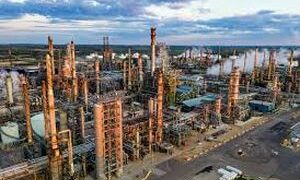
New Delhi:  Developed countries spent USD 378 billion subsidising fossil fuels in 2023, more than the USD 300 billion they have collectively committed to provide annually to the developing world by 2035 to tackle climate change, according to the latest data.

An analysis by the International Institute for Sustainable Development (IISD) showed that government support for fossil fuels reached at least USD 1.5 trillion in 2023, the second-highest annual total on record, after 2022 when the Russia-Ukraine war triggered a global fossil fuel price crisis.

More News

Indian AI startups should work towards global leadership: PM Modi

GDP to grow by 7.5% in FY26, says SBI report

Goldilocks moment: BJP on India’s GDP seen growing 7.4% in FY26

Load More

The 10 largest subsidisers of fossil fuels in 2023 included Russia, Germany, Iran, China, Japan, India, Saudi Arabia, the Netherlands, France, and Indonesia.

The data revealed that 23 developed nations (Annex II countries) — mandated under the UN climate convention to provide climate finance to the developing world — spent USD 378 billion on fossil fuel subsidies.

At the UN climate conference in Baku, Azerbaijan, last month, these nations committed to providing USD 300 billion to developing countries by 2035 to help them tackle climate change — a far cry from the USD 1.3 trillion that the Global South needs annually to cope with the rapidly warming world.

India, Bolivia, Nigeria, and Malawi, speaking on behalf of a group of 45 least developed countries (LDCs), severely criticised the new climate finance package for the developing world.

India argued that USD 300 billion is insufficient to implement ambitious national climate plans known as Nationally Determined Contributions (NDCs) and pointed out that when adjusted for inflation, it falls short of the previous USD 100 billion goal agreed in 2009.

IISD researchers said developed countries spending USD 378 billion on fossil fuel subsidies shows that public funds are available but are being “directed in the wrong direction”. They suggested that fiscal space freed up through fossil fuel subsidy reforms could be redirected to meet climate finance commitments.

Fossil fuels — coal, oil, and gas — are the largest contributors to climate change, accounting for over 75 per cent of global greenhouse gas emissions and nearly 90 per cent of all carbon dioxide emissions.

Although many governments have taken steps to reduce the carbon intensity of their economies, certain policies still encourage fossil fuel production and consumption. Fossil fuel subsidies are a prime example of such policies.

A fossil fuel subsidy refers to a government intervention that provides benefits or preferences for fossil fuel production or consumption relative to alternatives.

 

Previous Post

NDA, INDIA bloc MPs come face to face at Parliament’s Makar Dwar; BJP alleges Rahul pushed its MP

Next Post

Experts call for higher ‘Sin Tax’ on tobacco, similar products ahead of GST council meet

Press Trust of india

Press Trust of india

Related Posts

Indian AI startups should work towards global leadership: PM Modi

Ease of justice must for all, language of law should be local, simple: PM Modi
January 8, 2026

New Delhi: Prime Minister Narendra Modi on Thursday said the world's trust in India is its biggest strength and emphasised...

Read moreDetails

GDP to grow by 7.5% in FY26, says SBI report

GDP growth slows to 2-year low of 5.4% in Q2 on poor show by manufacturing, weak consumption
January 8, 2026

New Delhi:  India's economy is expected to grow at 7.5 per cent in 2025-26 with upward bias, marginally higher from...

Read moreDetails

Goldilocks moment: BJP on India’s GDP seen growing 7.4% in FY26

January 8, 2026

New Delhi:  The BJP on Thursday described as "Goldilocks moment" the estimate that India's economy would grow by 7.4 per...

Read moreDetails

India’s GDP estimated to grow at 7.4% in FY26

GDP growth slows to 2-year low of 5.4% in Q2 on poor show by manufacturing, weak consumption
January 7, 2026

New Delhi: The Indian economy is likely to grow at 7.4 per cent in 2025-26, up from 6.5 per cent...

Read moreDetails

Delhi HC seeks RBI stand on PIL over data protection violation by digital lending apps

PIL in Delhi HC to see feasibility of holding Lok Sabha, assembly elections together
January 7, 2026

New Delhi:  The Delhi High Court on Wednesday sought the response of the Reserve Bank of India on a public...

Read moreDetails

Amendments to Forest Conservation Act opened door for privatisation of forest management: Cong

January 7, 2026

New Delhi:  The Congress on Wednesday alleged that the amendments made to the Forest (Conservation) Act in 2023 have opened...

Read moreDetails
Next Post

Experts call for higher 'Sin Tax' on tobacco, similar products ahead of GST council meet

  • About us
  • Contact us
  • Our team
  • Terms of Service
E-Mailus: kashmirimages123@gmail.com

© 2025 Kashmir Images - Designed by GITS.

No Result
View All Result
  • TOP NEWS
  • CITY & TOWNS
  • LOCAL
  • BUSINESS
  • NATION
  • WORLD
  • SPORTS
  • OPINION
    • EDITORIAL
    • ON HERITAGE
    • CREATIVE BEATS
    • INTERALIA
    • WIDE ANGLE
    • OTHER VIEW
    • ART SPACE
  • Photo Gallery
  • CARTOON
  • EPAPER

© 2025 Kashmir Images - Designed by GITS.