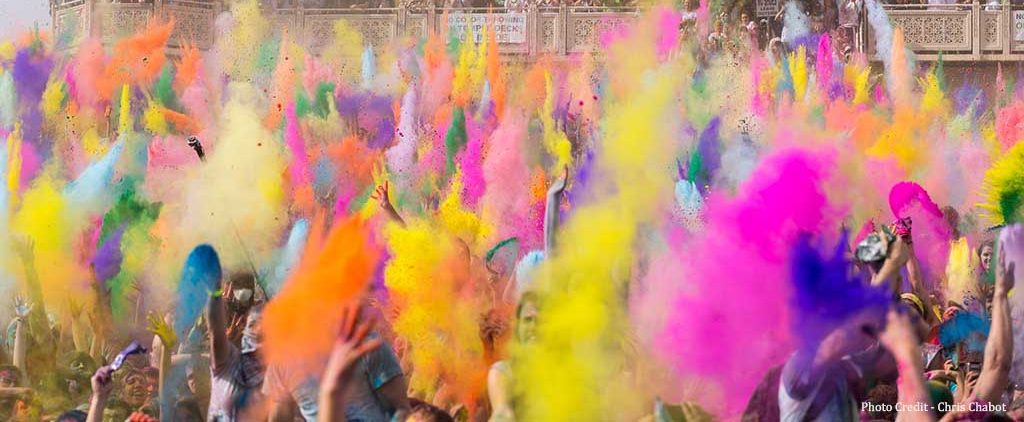
India is the country of festivals, which symbolises its enriched culture, tradition and civilisation. The festivals are based on geological happenings, mythological beliefs, happiness and joy, changes of seasons and various other factors. Holi is one of such a festival, which is called Rangotsava (festival of colours), Basantotsava (festival of spring) or Premotsava (festival of love). It is celebrated over two days. The first day, called ChhotiHoli or HolikaDahan and the second day, called main Holi, are celebrated with enthusiasm and fun.
HolikaDahan falls on Purnima of the PhalgunShuklaPaksha and symbolises the victory of good over evil. The Puran deals that on this day Bhagwan Vishnu in the form of Narsingham, who was half Nar (human) and half Singh (lion) killed the Demon King Hiranyakashipu for his evil deeds and saved the life of His disciple Prahlad. People lit bonfires in order to remove negativity from their lives and pray for the wellbeing of the family and society. To remove negativity from the house, its cleanliness is necessary. According to the Panchang, HolikaDahan is performed during the PradoshKaal (which starts after sunset) while the PurnamasiTithi prevails, , while Holi is celebrated on Chaitra Krishna PakshaPratipada.
Holi is an ancient Sanatan Dharma festival with its cultural rituals, which has been dealt in Puran, DaskumarCharit, Kalidas’s writings. It is also mythologically related to Bhagwan Krishna and Radha. It has special significance in BrajBhoomi, the birth place of Krishna and in Barsana, the village of Radha. The LatthmarHoli of Barsana is famous world-wide.
The women (as Gopis) use lathi (sticks) to beat the men (as Gops), who protect themselves with Dhals (Shields). It is also related to Bhagwan Ram in Tretayug, which reflects in the folk song “HoliKheleRaghuwiraAwadh Mein”.
Holi celebrates the arrival of summer and end of winter season in Indian Sub-continent. It is also an invocation for a good harvest spring season. It is also Known as Phagwa (named after Phalgun month), RangwaliHoli, Dhulendi, Dhuleti, DolPurnima, DolJatra, Pali etc. Outside India, it is famous and celebrated in Nepal, BangalaDesh, Surinam, Mauritius, Fiji, Trinidad, Guyana, Singapore, Indonesia, Malaysia, Jamaica and other countries with great zeal.
On the day of Holi, people apply Coloured powder solutions (Gulal) in the day-time and Abir in the evening. The custom and celebration vary with regions. It marks an occasion to renew ruptured relationship, eliminate conflicts, and get rid of ourselves from emotional impurities from the past.
Sikhs have traditionally celebrated the festival with its historic texts referring to it as Hola. Shri Guru GovindSinghjiMaharaj modified Holi with three day HolaMohalla extension festival of Martial Arts. The extension started the day after the Holi festival in Anandpur Sahib where the Sikh soldiers would train in various military exercises.
People must be aware of their wealthy health as well as environment. Hence, they should celebrate eco-friendly Holi by using natural and herbal colours &gulal instead of chemical-based synthetic colours &gulal. Herbal gulal is made from flowers, fruits, leaves and locally available ingredients. Palak (Spinach) and Mehandi is used for preparing green colour, Rose for pink colour, Haldi and Flowers of Palas and Genda (Marigold) for yellow and saffron colour, Chukandar (beetroot) for red colour. Chandan (Sandalwood) and other flowers and leaves are used for preparation of various other natural colours.
In addition to real life, the festival has been portrayed in reel-life of movies & serials too. The big as well as small screens acted as a catalyst to spread the festival vibes among the people. Several movies have become hit only because of Holi scenes and its melodious songs.
Now in the age of globalisation, Holi is not limited to a particular religion and belief, but is open to all communities and humankind. It represents arrival of spring, season of love, and forgiving others for past wrongdoings. It is the symbol of joy, humour, friendship, and positivity in human life.
(The Author is a technocrat and educationist)