 Art has always been a reflection of the society in which it is created. Throughout history, artists have responded to the social, political, and economic changes of their time with new forms of artistic expression. One such response to the changing world of the early 20th century was the emergence of abstract art, a movement that would go on to revolutionize the art world and pave the way for new forms of artistic expression.
Abstract art is a form of art that does not attempt to represent the physical world, but rather focuses on the use of color, form, and line to create a composition that is purely abstract. It emerged as a response to the increasing industrialization and urbanization of society, which many artists felt had led to a loss of spiritual and cultural values.
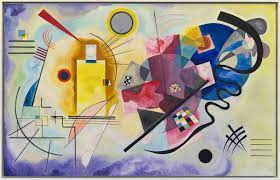
 One of the earliest proponents of abstract art was the Russian painter Wassily Kandinsky. Born in Moscow in 1866, Kandinsky began his artistic career as a figurative painter, but he soon became dissatisfied with the limitations of representational art. He was deeply influenced by theosophy, a mystical belief system that emphasized the spiritual nature of reality, and he believed that art should be a means of expressing the artist’s innermost feelings and emotions.
In 1910, Kandinsky began to experiment with abstraction in his paintings, creating works that were based on pure form and color. He believed that abstract art had the power to transcend the material world and connect with the viewer on a deeper, more spiritual level. In his seminal work “On the Spiritual in Art,” published in 1911, Kandinsky argued that abstract art was a “new art for a new age,” one that would reflect the spiritual and cultural values of a rapidly changing world.
Other artists soon followed in Kandinsky’s footsteps, including the Dutch painter Piet Mondrian. Like Kandinsky, Mondrian believed that art should be a reflection of the spiritual and cultural values of society, and he sought to create a new form of art that would express these values. He developed a style of abstract art based on simple geometric shapes and primary colors, which he believed represented the fundamental elements of reality.
 Another important figure in the emergence of abstract art was the French painter and sculptor Marcel Duchamp. Duchamp was a provocative and controversial figure, who challenged the traditional definition of art and the role of the artist in society. In 1917, he submitted a urinal as a work of art, which he called “Fountain.” The piece was rejected by the Society of Independent Artists, but it became an important symbol of the emerging avant-garde movement and a defining moment in the history of modern art.
The emergence of abstract art had a profound impact on the art world, and it quickly became a major force in modern art. It paved the way for other movements such as Surrealism and Abstract Expressionism, and it continues to influence artists today. The use of abstraction in art has allowed artists to explore new forms of expression, to experiment with new techniques and materials, and to challenge the boundaries of what is considered art.
Abstract art has also had a significant impact on other fields, including music, literature, and architecture. The use of abstract forms and structures can be seen in the work of composers such as Arnold Schoenberg and John Cage, as well as in the writings of modernist authors like James Joyce and Virginia Woolf. In architecture, the use of abstract forms and spaces has been explored by architects such as Frank Lloyd Wright and Le Corbusier, who sought to create buildings that were both functional and aesthetically pleasing.
It would be accurate to say that the emergence of abstract art was a revolution in the art world, challenging traditional notions of what art should be and paving the way for more such bold movements in art where artists fearlessly challenged the expected and normalized pattern of art.