• About us
  • Contact us
  • Our team
  • Terms of Service
Monday, February 16, 2026
Kashmir Images - Latest News Update
Epaper
  • TOP NEWS
  • CITY & TOWNS
  • LOCAL
  • BUSINESS
  • NATION
  • WORLD
  • SPORTS
  • OPINION
    • EDITORIAL
    • ON HERITAGE
    • CREATIVE BEATS
    • INTERALIA
    • WIDE ANGLE
    • OTHER VIEW
    • ART SPACE
  • Photo Gallery
  • CARTOON
  • EPAPER
No Result
View All Result
Kashmir Images - Latest News Update
No Result
View All Result
Home TOP NEWS

Scientists at SKUAST working on gene editing to increase yield of Pashmina wool

Press Trust of india by Press Trust of india
March 29, 2023
in TOP NEWS
A A
0
Scientists at SKUAST working on gene editing to increase yield of Pashmina wool
FacebookTwitterWhatsapp

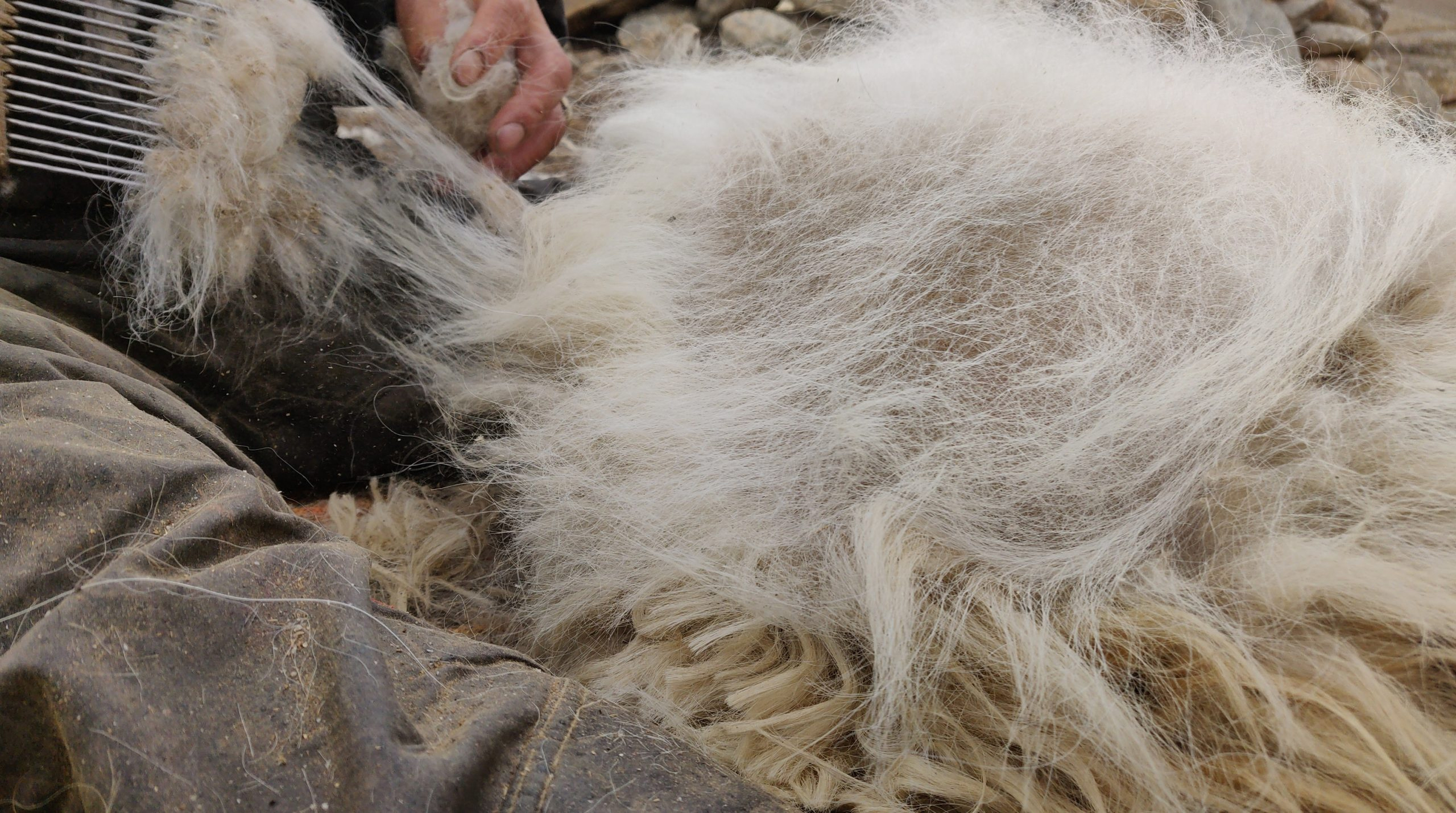
Srinagar: Twelve years after cloning the first Pashmina goat ‘Noorie’, the scientists from Sher-e-Kashmir University of Agricultural Sciences and Technology (SKUAST) are now working on gene editing technology that can increase the yield of famed cashmere wool.

Noorie died earlier this month after living a life span of a normal Pashmina goat. However, the cloning team at SKUAST has not stopped its work on improving the quality of animals.

More News

PM Modi lists 3 priorities for next decade: More structural reforms, deepening innovation, simpler governance

Amid global divisions, India’s timeless wisdom offers path of unity: LG Sinha

Mahashivratri celebrated with religious fervour in Kashmir

Load More

“We recently submitted a few projects to the ICAR. Currently, we are running a project on gene editing of the same Pashmina goats in which we were able to produce the edited cloned embryos of these goats,” researchers involved in the project said.

The aim is to create a cloned Pashmina goat with an edited genome.

“Once we are able to transfer the edited genes to the recipients and produce an offspring out of it, that will be the cloned edited goat. Our aim is to just increase the Pashmina (wool) production and so we have targeted a gene with which we can achieve this,” they added.

Giving the background of the cloning project, they said the process in India started with buffaloes at the National Dairy Institute of Karnal.

“I was working for the PhD research program at Karnal where we were able to clone Buffalo, which was the first clone produced in India, in any livestock species. Later on, once I moved back to my native department, we had one project from ICAR and the main aim of that project was to produce clones of Pashmina goats,” one of the researchers said.

The Pashmina goat is native to the Ladakh region and it lives at high altitudes with low oxygen, he said.

“It took us almost three years to standardise the technique and ultimately we were able to produce ‘Noorie’,” Shah added.

Being the first major animal cloning success at the SKUAST, the team of scientists was attached to Noorie but they are content that it paved the way for further research in the field.

“Noorie’s death was very emotional because this department got recognition and funding because of her. The Noorie project generated the platform for further research like this one (gene editing). Primarily, the objective was to generate the value chain on cloned production,” said Abrar Malik, a PhD student.

Malik was an undergraduate student when Noorie came to life.

“Noorie was produced in 2012, under the leadership of Dr Riyaz. I was pursuing my UG at that time and it was fascinating for me. It pumped me to join Biotechnology,” Malik said.

“Noorie recently passed away at age of 10 which is normal. She had lost her teeth and she was not eating properly. So, it was a kind of natural death,” the research scholar said.

On being asked if cloning can be used to save endangered species like Hangul (Kashmir stag), the experts said, “We haven’t undertaken it yet because for rare species we need a recipient where we can transfer the embryos. For those recipients, we rely on the wildlife department.”

“Species like Hangul are not available with them. Otherwise, we could have tried in that area also but the main focus is livestock species,” they said.


Previous Post

Mainly dry weather predicted for J&K in next 24 hours

Next Post

Govt order inquiry against private schools for prescribing textbooks by private publishers

Press Trust of india

Press Trust of india

Related Posts

PM Modi lists 3 priorities for next decade: More structural reforms, deepening innovation, simpler governance

Post ceasefire, PM Modi chairs high-level meeting
February 16, 2026

New Delhi: Asserting that his government's "Reform Express" is benefitting common citizens in a big way, Prime Minister Narendra Modi...

Read moreDetails

Amid global divisions, India’s timeless wisdom offers path of unity: LG Sinha

Amid global divisions, India’s timeless wisdom offers path of unity: LG Sinha
February 16, 2026

Jammu: Amid deepening economic and strategic divisions across the globe, Lt Governor Manoj Sinha on Sunday said India's timeless civilizational...

Read moreDetails

Mahashivratri celebrated with religious fervour in Kashmir

Devotees visiting the Shankaracharya Temple on Sunday to observe Mahashivratri and have Darshan
February 16, 2026

Srinagar: Devotees thronged Shankaracharya Temple on Sunday to celebrate Mahashivratri or Herath as it is known here in Kashmir. Though...

Read moreDetails

‘White-Collar’ terror probe: Doctors formed terror group ‘Ansar Interim’ for J&K, hinterland attacks

Govt promotes 27 DySsP to Incharge Superintendents of Police
February 16, 2026

New Delhi/Srinagar: The 'white-collar' terror module recently busted by the Jammu and Kashmir Police indicates that the doctors arrested in...

Read moreDetails

Security agencies bust massive ‘mule account’ network in J&K; fear misuse by terror groups

Twitter also sold data to Cambridge Analytica researcher: report
February 16, 2026

New Delhi/Srinagar:  Security agencies have busted an ever-growing ecosystem of "mule accounts" in Jammu and Kashmir that serves as the...

Read moreDetails

J&K plans policy to harness medicinal wealth, bioeconomy potential

RDD organizes 2-day capacity building training workshop on VRPR, GPDP
February 16, 2026

Jammu: The Jammu and Kashmir government is set to formulate a comprehensive Biotechnology Policy to position the Union Territory as...

Read moreDetails
Next Post
Govt announces amnesty scheme for registered dealers having tax arrears payable

Govt order inquiry against private schools for prescribing textbooks by private publishers

  • About us
  • Contact us
  • Our team
  • Terms of Service
E-Mailus: kashmirimages123@gmail.com

© 2025 Kashmir Images - Designed by GITS.

No Result
View All Result
  • TOP NEWS
  • CITY & TOWNS
  • LOCAL
  • BUSINESS
  • NATION
  • WORLD
  • SPORTS
  • OPINION
    • EDITORIAL
    • ON HERITAGE
    • CREATIVE BEATS
    • INTERALIA
    • WIDE ANGLE
    • OTHER VIEW
    • ART SPACE
  • Photo Gallery
  • CARTOON
  • EPAPER

© 2025 Kashmir Images - Designed by GITS.