By: M Ahmad
Safety of life and property was not considered to be a matter of public concern in ancient times, when accidents were regarded as inevitable or as the will of the God. Modern notions of safety developed only in the 19th century as an outgrowth of the Industrial Revolution, when a terrible toll of factory accidents aroused humanitarian concern for their prevention. Today the concern for safety is worldwide and is the province of numerous governmental and private agencies at the local, national, and international levels.
Earthquakes are the most destructive natural hazards throughout human history. Hundreds of thousand people lost their lives and loss of billions of dollars’ properties occurred in these disasters. Medium or high-intensity magnitude earthquakes in last twenty years showed that these loses continue. For reinforced concrete (R/C) buildings, inappropriate design such as soft and weak stories, strong beam–weak column, short column, hammering, unconfined gable wall and in-plane/out-of-plane movement of the walls causes damages. These are the main reasons. In addition to this, low quality of structural materials, poor workmanship, lack of engineering services, and construction with insufficient detailing of the structural elements are another reason of damages. However, construction of buildings by using local materials with poor workmanship on the base of traditional rules is the other reason of failures for these buildings.
Earthquake-resistant construction, the fabrication of a building or structure that is able to withstand the sudden ground shaking that is characteristic of earthquakes, thereby minimizing structural damage and human deaths and injuries. Suitable construction methods are required to ensure that proper design objectives for earthquake-resistance are met. Construction methods can vary dramatically throughout the world, so one must be aware of local construction methods and resource availability before concluding whether a particular earthquake-resistant design will be practical and realistic for the region.
Advanced designs intended to withstand earthquakes are effective only if proper construction methods are used in the site selection, foundation, structural members, and connection joints. Earthquake-resistant designs typically incorporate ductility (the ability of a building to bend, sway, and deform without collapsing) within the structure and its structural members. A ductile building is able to bend and flex when exposed to the horizontal or vertical shear forces of an earthquake. Concrete buildings, which are normally brittle (relatively easy to break), can be made ductile by adding steel reinforcement.
In buildings constructed with steel-reinforced concrete, both the steel and the concrete must be precisely manufactured to achieve the desired ductile behaviour. Earthquake-resistant construction requires that the building be properly grounded and connected through its foundation to the earth. Building on loose sands or clays is to be avoided, since those surfaces can cause excessive movement and nonuniform stresses to develop during an earthquake. Furthermore, if the foundation is too shallow, it will deteriorate, and the structure will be less able to withstand shaking. The foundation should therefore be constructed on firm soil to maintain a structure that settles uniformly under vertical loading.
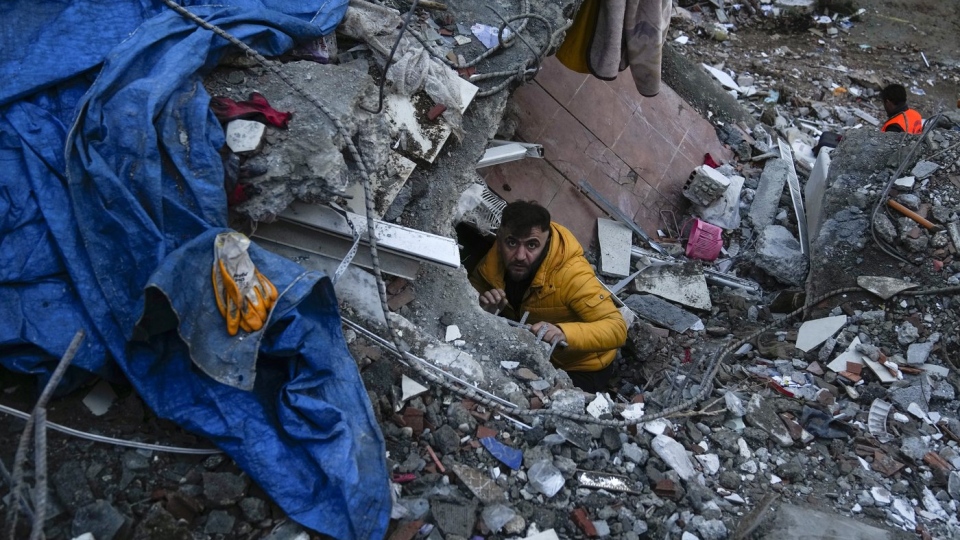
Natural calamity is unforeseen an there is no doubt that it causes massive destruction, but certain vital safety precautions may be implemented. Earthquakes hit Syria and Turkey holds a big lesson for other countries. The tragedy in those two countries might have been less severe if authorities in impacted areas had not allowed poor construction and rampant code violations. Parts of the Indian peninsula are located in a seismically active zone where the Indian and Eurasian plates collide. Around 59% of India is vulnerable to earthquakes of varying magnitudes, with 11% in Zone V (Kashmir Valley, western Himachal, eastern Uttarakhand, the Northeast, and the Rann of Kutch), 18% in Zone IV (Delhi, sections of Maharashtra, Haryana, UP, Bengal, and Bihar), and 30% in Zone III (Kerala, Goa, Lakshadweep, parts of MP, Jharkhand, Chhattisgarh).
The National Building Code (NBC) is a comprehensive building code that gives standards for building construction. There are several aspects that influence whether or not the construction should take place.
It is not that India lacks earthquake-resistant building standards. The 2016 National Building Code (NBC) includes provisions on earthquake-resistant design and construction. However, there is no law-making NBC into action. In Delhi an estimated 90% of buildings are at risk of collapsing in case of a strong earthquake. MCD created a safety audit policy to protect structures from earthquakes in 2019. However, this did not take off since the onus of performing and funding the audit was imposed on the public.
While Turkey’s Anatolian plate makes it one of the most earthquake-prone zones in the world, in the Indian subcontinent, the entire Himalayan belt also considered prone to great earthquakes of magnitude exceeding 8.0.
The earthquake in Turkey came as a nightmare for the nation as the chilly winter night increased the misery on people. Turkey has seen many quakes in the past, including the one in December of 1939, when the country had witnessed a massive earthquake of magnitude 8.0 that struck near the eastern city of Erzincan. More than 20,000 were reportedly killed. But has the nation learnt its lesson? If reports to believed, many buildings in Turkey century old and also made up of poor-quality materials. Reports have stated that those buildings, which constructed after the 1999 disaster are also not in line with earthquake safety standards.
In the last quarter century, severe earthquakes on the world like 1995 Kobe, Japan, 1998 Afghanistan, 1999 Kocaeli Turkey earthquakes more than 17,000 people were killed and more than 40,000 people were injured and 300,000 people became homeless, 1995 Kobe, Japan earthquake, it was reported that more than 6434 people lost their lives and nearly 4600 of them were from Kobe alone. In the year 2008, an earthquake hit the Sichuan China. Measured magnitude of earthquake from surface is 8.0. It was reported that nearly 70,000 people were dead, 95% of this death toll is in Sichuan province.
In addition, more than 370,000 injured and 18,000 people missing. In Italy, 308 people were killed and more than 1500 people were injured after L’Aquila earthquake in 2009. 2001 Gujarat earthquake take toll of 20,000 people, India, 2003 Bam, Iran, 2004 Indian Ocean, 2008 Wenchuan, China, 2009 L’Aqulia, Italy, 2010 Haiti, 2010 Chile, and 2011 Van earthquakes experienced construction industry to take severe measures to prevent collapse and to decrease damages of the structure. The deadliest earthquake in history was in Shaanxi, China in 1556. It’s estimated to have killed 830,000 people. This is more than twice that of the second most fatal: the recent Port-au-Prince earthquake in Haiti in 2010. It’s reported that 316,000 people died as a result.
A house can be made structurally safe, only if it complies scrupulously with all provisions of NBC (National Building Code of India) 2016 through proper siting, architectural planning, structural design, construction and periodic maintenance. This is possible with traditional materials and conventional construction technologies as well as modern materials and latest construction technologies. The National Building Code of India (NBC) is a comprehensive building code, formulated and published by the Bureau of Indian Standards, providing guidelines for regulating building construction activities across the country. It serves as a Model Code for adoption by all agencies involved in building construction works.
When will humanity, which has experienced countless natural disasters, realize that the universe we live in is a formidable battlefield. The universe is the most interesting friend of every living creature, because it is both our greatest friend and our worst enemy. The greatest weapon against the enmity of the universe is science. The technical shields that science offers us are the most effective weapons we can use against storms, earthquakes, fires and cosmic disasters.
All Earthquakes and Disasters are warnings; there’s too much corruption in the world-Aristotle
M Ahmad is a regular writer for this newspaper and can be reached at specialachivers78@gmail.com