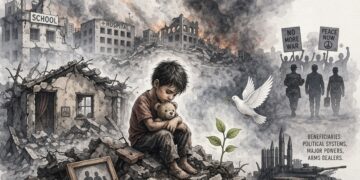
Instead of providing incentives for the encounters, now is the time to incentivize the arrests or surrenders of militants in Jammu and Kashmir.
In conflict settings, besides a huge multitude of civil actors including the representative governments, the military and police ought to be involved in peace and developmental processes. As all of them tend to share operational environments, a growing number of policymakers and scholars have long stressed the urgent need for standards, guidelines, and best practices for civil-military interactions. However, the researchers contend that conflict settings are dynamic and subject to rapid changes and this inference has serious implications for civil-military interactions. That being said, such uncertain circumstances call for effective and timely peace-building interventions. In order to achieve that, civilian and military authorities must share the common goal of minimizing tensions and maximizing the potential for negotiations. It is also important that no authority, civilian or military, should undermine the role of the other.
The role of Military as an important player in the peace process — a case study of engaging Military in Building Peace in Mindanao
In the southern Philippines, a good chunk of former military officials have been directly involved in the Mindanao peace negotiations between the government and the Moro National Liberation Front (MNLF). Also, civil society groups in Mindanao have developed what they call ‘peace champions’ within the military.
General Raymundo Ferrer, who was the key military official to embody this change in the military, became the first military graduate of the Mindanao Peacebuilding Institute, where he was exposed to something beyond combat – the principles of conflict transformation and peacebuilding. Subsequently, Ferrer went on to authorize peacebuilding training courses for other military officers within his jurisdiction and, as a result, hundreds of military officers completed peacebuilding training courses. All this has had a positive impact on the ground situation in the conflict-ridden southern parts of this Pacific country.
This reshaping of the military role from combat to peace process engagement has opened the door to civil-military interaction among other key players within the society. For example, through an interreligious forum comprised of Catholic and Protestant bishops and Muslim scholars — the Bishops-Ulama Conference — military officers and religious leaders have begun to dialogue and collaborate to build a strong constituency for peace. Religious leaders have used these exchanges to bring the problems of local communities to the attention of the military.
Varied civil society networks that also engaged with the military and conducted workshops and roundtable discussions in military camps helped bring together civil society groups and grassroots peace actors (community groups, local religious leaders, youth, and people’s organizations) who seldom interact with each another. It was through these efforts that the military first met and discussed peace process concerns with their counterparts in the Moro Islamic Liberation Front.
At the grassroots level, communities have worked with the military to establish ‘zones of peace’ to protect community members from armed conflict. The relationships created through contacts established at Mindanao Peacebuilding Institute workshops have also ensured military support for these local-level peace efforts. Some military ‘peace champions’ have joined regional peace networks to expand connections and contacts with various groups in their areas. Civil-military cooperation has expanded to address a range of concerns: creating a culture of peace, connecting economic development efforts with reconstruction work in areas affected by armed conflict, and supporting local conflict resolution.
What is the relevance of the Mindanao peace negotiations to peace process in Jammu and Kashmir?
Even if the Mindanao’s model of strategically engaging the military as an important stakeholder in the peace process cannot easily be replicated in Jammu and Kashmir, there is certainly a lot to learn and explore. The model demonstrates that there is a desperate need for creating the ‘peace champions’ within the military and police structures in the Union Territory, who must be supported so as to enable them help and support their colleagues, especially during the bouts of violence. While it might be very easy for the security forces to go back to the old ways of tackling violence, the conflict here has evolved and graduated to the level where a certain degree of restraint and patience even in the heat of the active combat (gunfights with the militants) holds a promise of big military and political dividends by way of winning appreciation and trust of the local population.
It is important to keep in mind that an amicable relationship between civil society and the military remain forever embedded in the context of human rights. And it is not only that the military has to claim respect for human rights, but this claim must be recognized by the civil society and subject to rational criticism. Moreover, the changing reality of armed conflict in Kashmir makes it imperative for the security forces to weigh in on whether their traditional role to use force against the armed groups has changed. It is their finesse at the blue helmet roles to maintain peace which will ultimately determine the efficiency of their contributions in not only containing but also transforming the tenure and nature of conflict in Kashmir.
After over 30 years of fighting, we continue to hear from both military and police officials about what they call “successful operations” against the militants. Now is the time — high time – to switch to a better and refined level of engagement with the militants. Instead of providing incentives for the encounters, now is the time for the government to incentivize the arrests or surrenders of militants in Jammu and Kashmir. ‘Smart’ has to replace ‘successful’. Mind it, smart is always successful – it’s time for “smart operations”.