New Delhi: India’s tax pie seems to have undergone a subtle change with a sharp drop in direct tax collections resulting from a disproportionate impact of the COVID-19 carnage on incomes.
The share of indirect taxes, which mainly comprise of levy on goods and services as well as import duty, has risen while that of direct taxes – made up of corporate and personal income tax – has gone down in 2020.
In an interview with PTI, Finance Secretary Ajay Bhushan Pandey said in a pandemic like this where the economy has been impacted, any large scale changes impact direct taxes more severely, whereas indirect tax collection is mostly proportional to business turnover and compliance.
“In a situation like this where the economy has been impacted and we are on the recovery path, the direct taxes are impacted more severely because the profitability of a company is not directly proportional to the turnover always. If your turnover reduces below a certain benchmark then the profit will not merely reduce, but it may get into a negative zone and therefore the company may not pay any income tax as it will be into a loss.
“Similarly, when we are in a recovery phase, the companies will take a longer time to come into the profitable zone to pay income tax. In the case of indirect tax, it is more or less proportional to the business volume and turnover and compliance,” he said.
While the government has officially not released direct and indirect tax collections, industry sources said the share of indirect taxes in overall tax collections rose to about 56 per cent, the highest in over a decade for the period. This follows a sharp 26-27 per cent decline in direct tax collections.
Direct taxes are a direct outcome of income levels while indirect taxes are mostly driven by consumption as demand for some goods is inelastic either because of they being essential in nature or not substitutable like petrol and diesel.
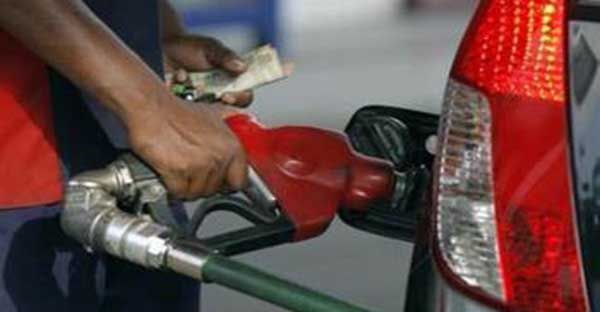
Excise collections rose in 2020 after the government raised the tax on petrol and diesel by Rs 13 and Rs 10 per litre, respectively. Customs collections, which reflect duty paid on goods imported, grew substantially in November and December. While the revenue in December was up 94 per cent to Rs 16,157 crore, in November it was up 43 per cent to Rs 11,598 crore.
Pandey said this buoyancy in Customs collection would be due to many factors, including the introduction of faceless assessment.
“We are doing the analysis as to what kinds of goods are getting imported and customs duty on those items,” he said. “We have also brought in CAROTAR rules wherein the import from FTA countries are also being subjected to greater scrutiny and we are ensuring that goods which have undergone requisite value addition in exporting countries only they are given the benefit of FTA. So these measures, along with an uptick in the economy, are yielding results.”
The havoc wrecked by the pandemic on tax collections – that is a reflection of the economic well-being of a nation – led to the first major showdown between the Centre and the states since the implementation of the GST regime three years ago.
Sharply split on political lines, states demanded Centre to compensate them – through borrowing or from its own coffers – for the loss of revenue in a year that saw 69-days of complete lockdown and gradual easing thereafter.
The sharp decline in GST collections has led to Rs 1.80 lakh crore shortfall in GST revenues on states. This includes Rs 1.10 lakh crore revenue loss on account of GST implementation and Rs 70,000 crore on account of the pandemic.
The Centre initially opposed the demand made by non-BJP ruled states, insisting that states should borrow against future accruals of GST. For days and weeks, it gave all kinds of reasons why states should borrow but one fine day it agreed to borrow and pass on the loans to states.
GST collections, which along with excise and customs duties form part of indirect tax kitty, seemed to have stabilised over Rs 1 lakh crore mark towards the end of the year as the economy reflated and touched an all-time high of over Rs 1.15 lakh crore in December.
But by then the pandemic had left its indelible mark.
Deloitte India Partner M S Mani said “the trend in GST collections during the next two months would indicate the extent to which the collection targets are likely to be fulfilled. The shortfall in the collections during the initial part of the current fiscal due to the countrywide lockdown is significant and would have a bearing on the fiscal deficit numbers”.
Shardul Amarchand Mangaldas & Co Partner Rajat Bose said “It appears that the share of indirect tax collections will increase in the overall tax collections this year. This is because generally, the deficit in indirect tax collections is significantly less as compared to the deficit in direct tax collections.”
Pandey said the government took many landmark steps during 2020 including bringing a dispute resolution scheme Vivad Se Vishwas, introducing faceless assessment, equalisation levy on e-commerce supply or services, replacing Form 26AS by Annual Information Statement.
With over Rs 9 lakh crore locked up in disputes, the Budget announced the Vivad Se Vishwas scheme by way of which disputes could be settled on a payment of tax which is under litigation along with complete waiver from interest and penalty and immunity from prosecution. The scheme garnered over Rs 72,000 crore till mid-November.
Faceless assessment and appeals has brought in a paradigm shift from the earlier face-to-face scrutiny assessment and appeals procedure and is aimed at ensuring no personal interface between taxpayer and assessee.
Taxability of dividends in India underwent a major overhaul during the year with Finance Act 2020 abolishing Dividend Distribution Tax (DDT) payable by domestic companies on the declaration of the dividend and re-introducing the conventional regime of taxation of dividends in the hands of shareholders.