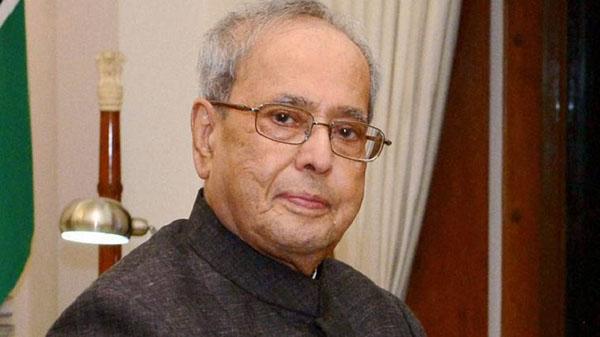
New Delhi: A quintessential party loyalist and the trusted Man Friday of three Congress prime ministers, Pranab Mukherjee’s climb up the political ladder stopped just short of his ambition to occupy 7 Race Course Road, instead sending him to the Rashtrapati Bhavan as the country’s first citizen.
Mukherjee, India’s 13th president, Congress’ troubleshooter through the decades and one of the country’s most respected politicians, died on Monday after a 21-day illness and five decades in public life. He was 84.
A people’s person till the end, ‘Citizen Mukherjee’ used Twitter to communicate to the world that he had tested positive for COVID-19 on August 10. It was his last post, and his last words to the public.
Demonstrating his ability to quickly adapt to situations as they arose, Mukherjee was at ease with the new mode of communication. Twitter was a platform he used often, to express his condolences on the death of leaders and friends, greet people on festivals or wish them on their birthdays.
Some politicians don’t fade into the background. And so it was with the scholarly Mukherjee too. He remained a presence to contend with even after he demitted the office of president, often making headlines as he attended book launches and delivered lectures.
It was a life of many firsts and accomplishments for the West Bengal-born politician, famed for his encyclopaedic memory, razor sharp intellect and deep insights into issues.
In 1982, he became India’s youngest finance minister when he was just 47. In the years that followed, he served as India’s minister for External Affairs, Defence, Finance and Commerce and was the first Indian president to have done so.
Mukherjee managed the rare distinction of serving three prime ministers as minister — Indira Gandhi, P V Narasimha Rao and Manmohan Singh – ever the Congress’ trusted Man Friday as it evolved over the decades.
Mukherjee was also India’s only non-prime minister who was leader of the Lok Sabha for eight years. He was also leader of the Rajya Sabha from 1980-85.
There were other landmarks in a remarkable political career, which started in 1969 as a Rajya Sabha member for the Bangla Congress which subsequently merged with the Congress.
When he became president in 2012, Mukherjee was heading 24 of 39 GOMs (groups of ministers). Between 2004-2012, he chaired 95 GOMs.
Mukherjee was famous in political circles as a consensus builder. He inspired trust among leaders across the political spectrum, an asset that proved handy at the time of his election as president.
It was a many splendoured political career, which ended at the presidential palace. But the prime minister’s post eluded him, even though it was a position he openly aspired for.
In his book “The Coalition Years”, Mukherjee acknowledged that he had hoped to get the post in May 2004 after then Congress president Sonia Gandhi herself declined the position.
“Finally she named Dr Manmohan Singh as her choice and he accepted. The prevalent expectation was that I would be the next choice for prime minister after Sonia Gandhi declined,” Mukherjee wrote, admitting that he had initially refused to join the cabinet of Manmohan Singh who had been his junior in the past but agreed when Sonia Gandhi insisted.
Mukherjee remained the UPA’s chief crisis manager through its tumultuous years, starting 2004 until he became president on July 25, 2012.
Born on December 11, 1935 in the small village of Mirati in West Bengal’s Birbhum district, Mukherjee received early lessons in life from his freedom fighter parents. His father, a Congress leader, endured great financial hardship and was sent to jail several times for his role in the freedom struggle.
The roots were strong and never forgotten, taking him back often from the corridors of power to his village during Durga Puja, even when he became president. Photographs of Mukherjee, performing prayers in a traditional dhoti, made it to the public domain through his years as minister and president.
In 2015, he lost his wife Suvra Mukherjee. He is survived by his two sons Indrajit and Abhijit, and daughter Sharmistha, who was by his side during important events of his president years.
Mukherjee, who served in the Rajya Sabha for five terms and in the Lok Sabha twice and was one of India’s longest serving parliamentarians, became a member of the Congress Parliamentary Party when the Bangla Congress merged with the Congress in 1971.
Though he occupied various positions in the government, Mukherjee was elected to the Lok Sabha for the first time only in 2004 when he won from West Bengal’s Jangipur constituency. He had lost the previous two Lok Sabha contests — from Malda in 1977 and Bolpur in 1980.
With his vast knowledge of post independence political history and governance, Mukherjee remained a key figure and active participant in shaping the course of India’s development.
He served as member of the Congress Working Committee, the highest decision-making body of the party, for 23 years until becoming president in 2012 and was often called in to trouble shoot for the party.
Mukherjee’s meeting with Henry Kissinger in 2004 altered the course of Indo-US strategic partnership. In 2005, when he was defence minister, the new framework for US-India defence relations was signed.
From 2004-2012, Mukherjee played a key role in critical decisions of the Manmohan Singh-led government on issues such as Right to Information, food security as well as the setting up of the UIDAI and the Metro Rail project.
He was also known as one of the chief architects of the post-Congress era of Indian politics, playing an active role in galvanising the outside support which the Congress offered to the United Front governments led by then prime minister H D Deve Gowda and later I K Gujral.
Most of his political life spent as a committed Congress member — except for a brief spell between 1987 and 1988 when he was out of the party — was fairly non-controversial.
But in June 2018, a year after he demitted office, Mukherjee triggered huge controversy by visiting the RSS headquarters in Nagpur and delivering a valedictory address there.
In 2019, he was conferred India’s highest civilian honour Bharat Ratna by the BJP government, a development that became a subject of intense political debate.
Ending his political career as president of India, he left his mark on the highest office of the land too.
Mukherjee’s tenure as president will stand out for the tough stance he took on mercy petitions. Of the 34 mercy petitions presented to him, he rejected 30.
He will be remembered for the steps he took to make the Rashtrapati Bhavan closer to the people. He opened it up for the public and made a museum.
The Durbar Hall was refurbished with Mukherjee ensuring during his presidency that events were held under its lofty dome. The library was renovated as well with researchers getting access to its extensive catalogue of books.
Besides, he opened the gates of the presidential palace for writers, artists, innovators, scientists and students through an in-residency programme
The keen intellectual with an avid interest in history, international relations and parliamentary processes has gone. And with him, one more witness to India’s growth story and evolution through the decades.