By: Khaled Ahmed
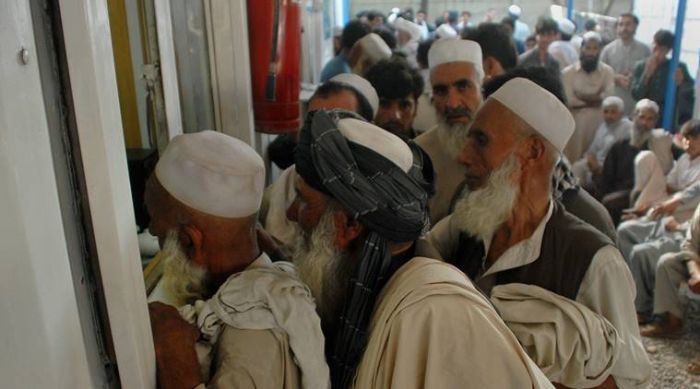
On Sunday, September 16, Prime Minister Imran Khan announced that he would start “work immediately” on providing passports to the children of refugees born in Pakistan. He might soon have to eat his words because the opposition parties plus the army would have none of it. As many as 1.5 million children born to refugees in Pakistan are currently denied citizenship in violation of the constitution.
The United Nations High Commission for Refugees (UNHCR) says Pakistan is home to the largest refugee population in the world: More than 1.45 million are in the country, most of them from Afghanistan. The provinces of Sindh and Balochistan have spoken out in opposition to the prime minister’s plan. Both are victims of “internal” and “external” Pashtun migration into their territories, threatening to outnumber the local Baloch and Sindhi inhabitants. Taken together, both migrations ratchet up the number of the displaced to 7 million in the city of Karachi, now known as the biggest Pashtun city in the world.
Sindh was the first province to be deluged with refugees. It was created with the help of migrants from Gujarat, India, who created the port of Karachi and populated the four big cities while the native Sindhis remained in the countryside. In 1947, when the Hindus were forced to leave, four big cities of Sindh lost their majority populations. It was presumed that the Sindhis would move into them and thus climb the sociological ladder they had missed in the past. But the Muslim refugees moved in from India and took the place of the Hindus who had left. The rural Sindhis got left out of the first capital of Pakistan, Karachi.
When it became the capital of Pakistan, Karachi’s population was about 4,50,000. It grew to one million in 1951. From then onwards, the rate of growth was a blinding 80 per cent, making it 60 times the 1947 size; and the recent census in 2017 has notched it up to 22 million, according to estimates that reject the official count. In this growth, the Sindhi has not advanced but the immigrants have. Pakistan’s tribal areas were deliberately left out of normal development “to safeguard their tribal code and way of life” till the mountains where they lived couldn’t hold them. Internal migration of the tribal Pashtun faced a race for survival that hit not only Balochistan and Sindh, but also the Gulf countries.
Karachi has, according to the community leaders and social scientists, over 1.6 million Bengalis and up to 4,00,000Rohingyas, too. These groups came after the 1979 invasion of Afghanistan by the Soviet Union, but the Rohingyas were brought in to fight the covert jihad in Afghanistan with American-Saudi money. The sappers who destroyed the great Buddha statues of Bamiyan, they say, included Bangladeshis and Rohingyas. Some Indonesian mujahideen went back from Karachi to create disorder at home. The covert jihad caused millions of Afghans to flee into Pakistan and Pakistan had to look after them with UN funds.
After the Soviets left and al Qaeda did its 9/11 in 2001, the Pashtun government of Mullah Umar fell and most of it moved to Quetta in Balochistan which began to lose its Baloch majority status to the Pashtun. But the Shia Hazaras who inhabited Quetta after moving in under the British Raj became targets of new terrorism imported from Afghanistan. Quetta became a Pashtun-majority city while the Baloch, like Sindhis, remained stuck in their villages.
In History of Pashtun Migration, 1775-2006, Robert Nichols says: “In Pakistan in 2004, perhaps 5,00,000 Afghans still lived in Karachi. One estimate of this period listed over one million Afghans still in Pakistani camps recognised by the UNHCR, plus 5,00,000 to one million urban refugees in Pakistani cities, and another million or so in the country for other reasons.”
Both Sindh and Balochistan are threatened with loss of ethnic identity and domination of past and recent immigrants. In both provinces, the local nationalities have remained backward, stuck in their fast deteriorating habitat. The ethnic conflict is simmering under the surface as politicians elected to the legislature oppose Prime Minister Khan’s proposal of owning up the children of these migrants as Pakistanis. Two states in turmoil in the neighbourhood have pushed their refugees into Pakistan, in the case of Bengalis the pattern of displacement being more complex. By 1995, Bangladeshis had crossed the 2,500,000 mark.
Half a dozen terrorists groups aligned to various Taliban Pashtun leaders had occupied entire towns of Karachi as “no-go” areas till recently, using suicide bombers against their Shia and MQM enemies. The latter also turned violent in the urban war. Pakistan’s inability to govern all its territory effectively is in large measure owed to injections of alien populations forced to survive in crime-inducing, desperate conditions. Today, the original population is simply not able to sustain its presence without losing its own right to democratic self-government. The cross-border conflict is nowhere near its end while its transfer into Pakistan threatens to increase instead of dying down.
Courtesy Indian Express