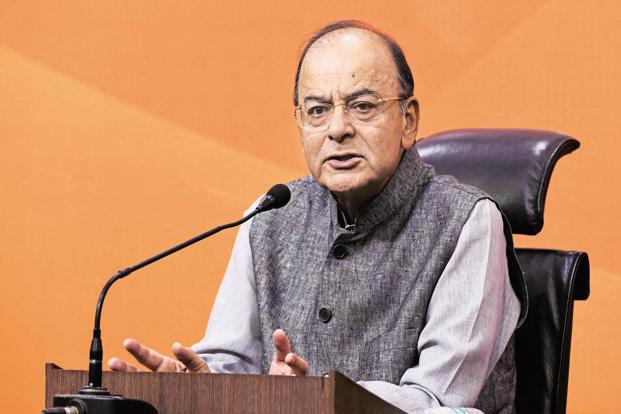
A few days ago, a cheerleader for the BJP writing on the editorial page of a newspaper thanked Mr ArunJaitley and me for engaging in a “high quality debate on economic growth”. He reluctantly conceded that I had won the growth debate but charged that the Congress party had “mismanaged the economy”. Thank you, but no thank you.
Mr Jaitley, on the previous day, had weighed in with the comment that “UPA did no reform during its reign”. Firstly, the UPA did not reign, it governed the country for 10 years and then bowed out of office. Secondly, if Mr Jaitley is right, that no reforms were done during the UPA’s 10 years, India must be the only country in world history that achieved double-digit growth (and average annual growth of over 8 per cent during 10 years) without doing any reform!
UPA Vindicated
Some of you may have missed the development that triggered the debate. The development was the release of the back series data of GDP to be able to compare the growth rates of the past with the growth rates since 2012-13 when the base year was changed and a new methodology was adopted. Here are the results: (see table)
The conclusions are obvious: the 10-year period of the UPA recorded the highest decadal growth (8.02 per cent at market prices and 8.13 per cent at factor cost) since Independence. When the UPA demitted office, growth had recovered in 2013-14 to 6.39 per cent at market prices. The Modi government had inherited an economy that was on the upswing. Gross Fixed Capital Formation in 2013-14 was 31.3 per cent. Merchandise exports had scaled a new peak of USD 315 billion. Foreign Exchange reserves had reached a high of USD 304.2 billion.
Within four months of the NDA assuming office, the government got an unexpected bonanza through the collapse of crude oil and commodity prices. Both internal and external conditions were conducive for high growth, but the government squandered the opportunity. The first year was promising and the second year too started well. The first major blunder was demonetisation on November 8, 2016. This was followed by other blunders — flawed and hurried implementation of GST and tax terrorism. Between 2015-16 and 2017-18, the growth rate declined by 1.5 per cent — exactly what I had predicted immediately after demonetisation.

True Reforms
Reform is a word that has many meanings. It is usually associated with economic reforms, but there are reforms outside the economy that are as important as economic reforms and, in their own way, reinforce economic reforms. An example that springs to the mind immediately is the reservation for Other Backward Classes (OBC) in Central universities and educational institutions that substantially increased the opportunities of higher education for 52 per cent of the population. That was a major reform of the UPA in 2006.
In an essay that I wrote on November 29, 2015, I had listed what I considered ‘true reforms’ in the modern era that began in 1991. I made a list of 11 reforms that included the Public Private Partnership (PPP) model to garner private resources for public projects and the Aadhaar-enabled Direct Benefit Transfer. Both ideas were contributed by the UPA governments.
Under ‘true reforms’ would fall the Fiscal Responsibility and Budget Management Act, passed by Parliament when the NDA-1 was in office but notified by the UPA-1 government. Likewise, the Value Added Tax (VAT) was implemented under UPA-1. Special Economic Zones were established following the passage of the Special Economic Zones Act in 2005. At end-2017, there were 222 SEZs and they gave a big push to merchandise exports that grew four-fold in 10 years. PPPs were instrumental in the aggressive expansion of capacity in airports, ports and power. The Mahatma Gandhi National Rural Employment Guarantee programme (and the Act that followed) supplemented rural-agricultural incomes, staved off hunger, and created demand in rural India. The universalisation of the Mid-day Meal Scheme had huge externalities.
Other Major Interventions
Right to Information, Right to Education and Right to Food were statutorily protected by laws made by Parliament. The National Horticulture Mission (NHM) and the RashtriyaKrishiVikasYojana (RKVY) boosted agricultural growth to an average of 3.7 per cent under the UPA. The National Rural Health Mission (NRHM) and the RashtriyaSwasthyaBimaYojana (RSBY) were major interventions in healthcare. The Right to Fair Compensation Act brought equity and transparency to land acquisition.
The National Disaster Management Authority Act, the Companies Act and the Lokpal and Lokayuktas Act were seminal legislation. The Women’s Reservation Bill, 2008, would have dramatically transformed the polity, but it is languishing in Parliament because the UPA lacked numbers and the NDA lacks will.
The Civil Nuclear Agreement in 2008 will remain a milestone in history.
Each one of the above was a major and path-breaking reform. It is unfortunate that none of them was acknowledged by the Finance Minister even as he failed to acknowledge that it was the UPA that delivered the highest decadal growth since Independence. The UPA-1’s record is beyond his reach in the remaining seven months, but he can try to catch up with the UPA-2.
Courtesy Indian Express