By: Huma Yusuf
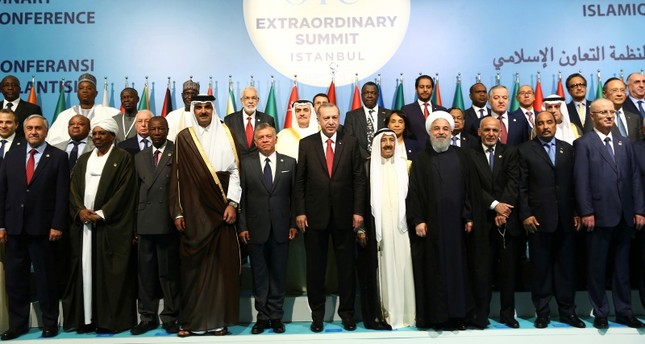
OUR (Pakistan) prime minister on Friday joined leaders from the Organisation of Islamic Cooperation (OIC) to condemn the recent violence in Gaza, the “brutal” and “criminal” actions of Israel, and the US decision to move its embassy to Jerusalem. Our prominent role in the special meeting fits the religio-nationalist mood that has gripped Pakistan in recent years; its simple messaging resonating with our righteous patriots: up with the Muslim world, down with the US and Israel.
But indignant fist thumping cannot mask the truth. Saudi Arabia has sided with Israel in efforts to undermine Iran and check its regional ambitions. The Gulf Cooperation Council remains at loggerheads a year into the dispute. The Saudi-led conflict in Yemen rages, fuelling one of the worst humanitarian crises of recent times. The horrors in Syria seem endless. Sectarian hatred is deeply entrenched across the Muslim world, with particularly violent ramifications in the Middle East.
The anti-US posturing is also ambivalent at best. While condemnation of the embassy move has been almost universal — encompassing not only members of the OIC but also many European and Asian countries — the rejection of US policies is hardly that resolute. Washington and Riyadh, for example, are enjoying revitalised relations spurred on by mutual suspicion of Iran (and Saudi Arabia’s dispute with Qatar, a US ally, has barely registered as a bone of contention).
The weakness of the OIC is reflected in the outcome of last week’s meeting. All the outrage cumulated in a plan to express solidarity with the Palestinians and lobby other countries not to move their embassies to Jerusalem — hardly a game plan to tackle the worsening plight of the Palestinians.
The sound and fury of the OIC meeting highlights the challenges ahead for Pakistan. At a point when our Foreign Office is faltering — as pointed out by Moeed Yusuf in these pages, writing about the snub our new US ambassador’s appointment represents for the diplomatic corps — we seem ill equipped to navigate the complex foreign policy landscape of the Middle East.
A show of Muslim unity serves to accentuate the fact that one of Pakistan’s trickier foreign policy puzzles is simultaneously managing relations with Saudi Arabia and Iran. Much has already been written about the need for Pakistan to juggle the relationships to prevent a return to the proxy sectarian war of the 1990s, and to continue to benefit from both Saudi benefactors and the opportunities for trade, energy connectivity and counterterrorism cooperation that Iran offers closer to home. This need is more urgent since America’s withdrawal from the Iran nuclear deal.
In the event that European efforts to save the deal fail, Tehran would likely resume its nuclear programme. That in turn could stir Saudi aspirations of becoming a nuclear power. In this scenario, Pakistan could face pressure to support such a move with all its implications.
The failure of the Iran nuclear deal could also present Pakistan with a new juggling act. Our typically binary foreign policy calculations make much of our tilt away from the US, and into China’s arms. But what if the US decides to push its attempts to weaken Iran further, either by targeting Iranian nuclear facilities in conjunction with Israel, or seeking regime change, as certain White House officials have hinted is the ultimate goal? In that scenario, Saudi Arabia would back America’s aggressive anti-Iran posturing, while China, which has opposed the US’s withdrawal from the agreement, would see an opportunity to strengthen ties with Tehran, drawing it further into the Belt and Road Initiative. How would Pakistan manage the competing interests of its key allies?
All this would be further complicated by the fact that Pakistan in some ways benefits from the collapse of the deal, despite our initial official statements in support of Iran. Further obstructions to doing business with Iran will limit the competition for Gwadar from Chabahar, and also stymie India’s plans to trade with Afghanistan via Iran. Seen this way, Pakistan is more aligned with the US than it would like to seem.
There’s also a domestic angle to consider. Pakistan’s support for Palestinians is ethical and necessary. But there’s a twinge of hypocrisy in our vehement condemnation of the human rights violations and brutal killings of Palestinians gathering in opposition to unjust policies. After all, closer to home, Pakistani citizens who gather to protest killings, displacement and humiliation are met with intimidation and media blackouts.
The idea of Muslim unity in the face of gross injustices may be a beautiful one. But there is little beauty in our world today. And Pakistan seems ill prepared to protect its interests — and those of all its citizens — in the midst of growing complexities.
Courtesy Dawn