By: Keki N. Daruwalla
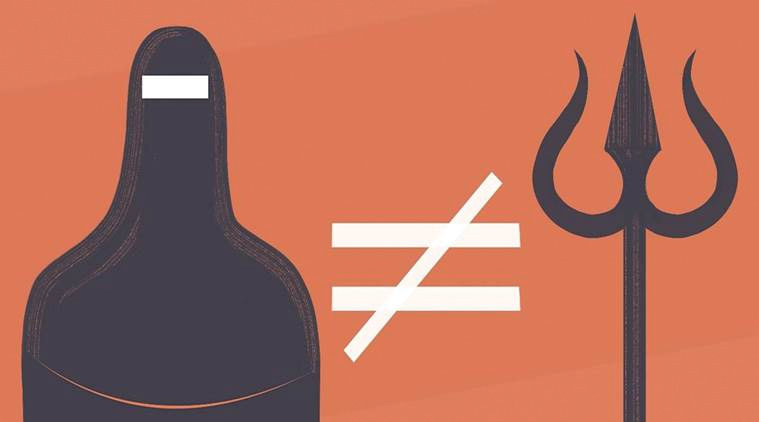
We all know that a symbol is much larger than the object from which it emanates. There can be no comparison between a stone and the symbol it turns out to be. A wooden cross has become a civilisational guiding light for two thousand years. Nothing can match it as far as symbols go. You can also manufacture symbols, for instance like the crescent and the star which every Islamic country appropriates. Etymologically, the word stands for both token and watchword. The idea or the essence behind the corporeal is the symbol. The white rose and the red rose became symbols for the Lancastrians and the Yorks during the War of the Roses that lasted for 30 years. Symbols can have two sides. Crusades meant one thing to King Richard and the obverse to Saladin. Muslims consider it the acme of bigotry. And “Jihad” is as vicious a term as you can think of today.
There are of course negative symbols as well, and the negativity grows with time. See what a symbol barbed wire has become. Auschwitz and Treblinka have of course been so well documented that the corporeal and the horror behind it, go hand in hand. For close to a thousand years, no Indian has forgotten the sack of Somnath (1024 AD) by Mahmud Ghazni.
Hence, I was surprised by Prakash Singh in his article ‘A case of selective outrage’ (IE, May 12) using the term “dilapidated structure” for the Babri Masjid. Has he forgotten the bomb blasts that shook Bombay in 1992 and the wave of bomb terrorism that followed? “Disused structure” was the term which the BJP invariably used for the mosque. For the Muslims it was a symbol. And when the domes went down with the accompanying cry, “ek dhakka aur” (one more push), and Muslims were killed by kar sewaks in Kanpur and Bhopal and other places, the community hit back. There is no justification for the terror unleashed and the blasts all over the country and beyond by Dawood and Memon. In Pakistan, over 80 temples were demolished in retaliation. Nothing better illustrates my point than the Babri masjid, “disused” and “dilapidated” as it may have been, and the symbol it became. I would have expected Singh to be a little more sensitive to the issue.
The analogies Singh draws are also way out. He is putting on the table the 1962 debacle with the rape and murder of an eight-year-old girl, with two state ministers of the BJP speaking on behalf of the perpetrators! Mahatma Gandhi’s assassination or the Nellie massacre do not belong in this debate. And it is noticeable, that when we talk of India’s dark hour, Singh never mentions Gujarat of 2002, when close to a thousand Muslims were killed, with the police just looking on. Nineteen eighty four and Gujarat 2002 are of the same ilk. Objective analysts should not be guilty of ignoring either of the two. Both were reactions, 1984 to the fact that those who were supposed to guard Mrs Indira Gandhi, riddled her with over 30 bullets. And Gujarat was a reaction to 60 Hindus being burnt alive in Godhra. The lesson India and the Indian police have to learn is to prevent murderous mob fury as the result of such a crime. The police needs to act at such moments, irrespective of what their political masters want.
Singh is amazingly viewing the Kathua rape through the prism of national security! Do people understand what that crime is all about? Kathua is about the contempt for gender, contempt for children, a despicable crime committed for a personal end. It is about the settler versus the nomad, agriculturist against the pastoral, urbanite pitched against the tribal. It is about a diabolical scheme to get rid of the Bakerwals from the area through a shameful ruse — child rape and murder. As chance would have it, it was accompanied by an alleged rape by a BJP MLA in Unnao, UP, Kuldeep Singh Sengar. The police sided with the MLA, and no action by the police was taken despite a report being lodged. The 16-year-old victim’s father was beaten by the brother of the MLA and died as a result of injuries, including broken teeth and jaw. The police sided with the MLA and his brother. The high court had to move into action, only then did the wheels of law start grinding, ever so softly and slowly. The two crimes put together were a moral catastrophe.
There are other signs of a deep rooted bias in the establishment. How did we react to the Rohingya crisis? Not by interceding on their behalf, but going to Myanmar to discuss security concerns of the Myanmar government vis-à-vis the Rohingya. Now we are making an about turn. Had the Rohingya been Hindus, our attitude would have been different.
I for one am happy that the letter from civil servants talked about the “culture of majoritarian belligerence and aggression promoted by the Sangh Parivar” and expressed anguish over the “agenda of division and hate”, which had been “insidiously introduced into the grammar of our politics, (and) our social and cultural life”.
Courtesy Indian Express