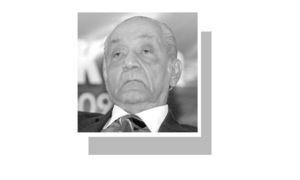
ON Aug 5, 1983, the chief minister of Karnataka Ramakrishna Hegde inaugurated a seminar on centre-state relations at Bangalore at which he fired the first salvo in a campaign which he continued to wage for his next five years in office. He said: “Even the governor has become a glorified servant of the union. An omnipotent and omnipresent union that the present central government has grown into and withering states are the very negation of the democratic policy.”
The governor of Karnataka was stung to the quick. The description fitted him eminently. He angrily retorted that the governors were not servants of anybody. Little did he realise that in Hegde he had caught a Tartar who would make him regret his denial. For, on Aug 17, the chief minister promised the state assembly that he would prove his remarks to the hilt.
He did. On Sept 22, he tabled in the state assembly a documented White Paper on The Office of the Governor; Constitutional Position and Political Perversion. Both were proved. A commission on centre-state relations, headed by Justice R.S. Sarkaria of the supreme court appended the white paper to its report in full.
Now, over three decades later, the position is worse. It has steeply deteriorated. Governors vie with one another to please their masters in New Delhi; specifically the power-hungry Prime Minister Narendra Modi, by wantonly needling the chief minister if he belongs to a political party which is opposed to Modi’s party, the BJP.
This is precisely what the Sarkaria Commission’s report had warned against. It said: “It is desirable that a politician from the ruling party at the union is not appointed as governor of a state which is being run by some other party or a combination of parties.”
To be fair, the Congress had set the precedents by flouting this feeble recommendation devoid of any check on power. But the grossness of today belongs to the BJP’s governors. They publicly attack their chief ministers. Their behaviour before their appointment as governors seems to have weighed heavily in the minds of the people who matter as ones who were uniquely qualified to do a hatchet job.
Three stand out from this crowd. Ram Naik of Uttar Pradesh a dedicated RSS man; the governor of West Bengal, Keshari Nath Tripathi, who had won his spurs as one of the most partisan speakers of the Uttar Pradesh Assembly and the crassly loudmouthed Kiran Bedi as lieutenant-governor of Pondicherry.
In the past, gubernatorial misbehaviour consisted of partisan decisions on the appointment of the chief minister in a hung assembly, dissolution of the assembly or refusal to dissolve it despite the chief minister’s binding advice and the like. The centre’s hand was ill concealed in such situations.
In the early decades of Congress rule at the centre, governors openly acted as political instruments of the central government. But they kept silent publicly for the most part. The loud pipsqueaks are recent entrants.
India has now come to such a pass that the office of head of state has been perverted beyond recognition in the states. Parliamentary democracy has been undermined; contrary to the intentions of the framers of the constitution.
In the early days of constitution-making, it was proposed to have elected governors in the states. It was soon realised that the elected governor would be a rival centre of power vis-à-vis the chief minister. It was then decided that the governor would be a head of state governed, like the president, by identical conventions of the parliamentary system. Dr B.R. Ambedkar assured the constituent assembly on Dec 3, 1948, that “the position of the governor is exactly the same as the position of the president”.
But while the president is elected by the central and the state legislatures, the governor is appointed by the president, ie the central government. He has no security of tenure, can be transferred from one state to another and be sacked freely. After every change of government in New Delhi, governors are sacked to be replaced by those of the party that had come to power at the centre.
The supreme court ruled that “his office is not subordinate or subservient to the government of India. He is not amenable to the directions of the government of India, nor is he accountable to them for the manner in which he carries out his functions and duties. He is an independent constitutional office which is not subject to the control of the government of India. He is constitutionally the head of the state in whom is vested the executive power of the state and without whose assent there can be no legislation in exercise of the legislative power of the state”. Politics decide the very opposite.
Only a constitutional amendment imposing checks on abuse can ensure his independence. That requires a consensus which is impossible in the polarised politics of today. Meanwhile, federalism suffers as much as parliamentary democracy.