United Nations, May 8 : India’s economic growth was pushed downward in 2017 due to the Goods and Services Tax (GST) as well as protracted issues of corporate and bank balance sheet problems, according to a UN report which said the country is expected to recover gradually and grow at 7.2 per cent in 2018.
According to estimates in the UN Economic and Social Commission for Asia and the Pacific’s (ESCAP) flagship publication the Economic and Social Survey of Asia and the Pacific, India’s GDP grew at 6.6 per cent in 2017, down from 7.1 per cent in 2016.
The report said that India’s GDP is forecast to grow 7.2 per cent in 2018 and 7.4 per cent next year.
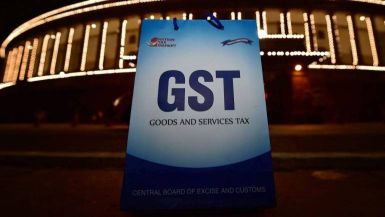
In India, the recently introduced GST as well as weak corporate and bank balance sheets resulted in modest economic growth, but signs of recovery emerged in the second half of 2017, it said.
“The recently introduced Goods and Services Tax (GST) as well as protracted issues of corporate and bank balance sheet problems pushed the growth rate of India downward” in 2017, it said.
Developing Asia-Pacific economies are on track to record an overall growth rate of 5.8 per cent in 2017, compared with 5.4 per cent the previous year. They are projected to grow by 5.5 per cent in both 2018 and 2019, with a slight moderation in China offset by a recovery in India and steady performance in the rest of the region.
“In India, a gradual recovery is expected; private investment is expected to revive as the corporate sector adjusts to GST, infrastructure spending increases and corporate and bank balance sheets improve with government support,” the report said.
Tax reform and strengthening tax collection could also add as much as 8 per cent to the gross domestic product (GDP) of countries such as Myanmar or Tajikistan; and about 3 to 4 per cent in larger countries, like China, India or Indonesia, according to ESCAP.
Further, weak corporate and bank balance sheets in India also contributed to a sharp slowdown in investment; thus, simply lowering policy interest rates was not enough to revive investment in that country. In India “the new bankruptcy code and the recapitalization package for public sector banks are expected to support a gradual recovery in private investment.”
The report said that consumption also strengthened in India as the impacts of demonetisation faded.
On the problem of India’s bad loans, the report said the share of non-performing loans in the country has doubled, and defaults on corporate bonds and syndicated loans have surged in recent years. By mid-2017, distressed bank loans reached a record high of 9.5 trillion rupees (USD 148 billion), but more recent revelations suggest that the actual figure may be higher.
“The banking problem is closely related to high corporate leverage; thus, the two problems are known as the ‘twin balance sheet’ challenge. If it does not effectively address that challenge, India will continue to face weak private investment and modest economic growth,” it said.
While it has been acknowledged that the GST has reduced the complexity of its taxation system, its tax laws still are perceived to be second most complex in the Asia-Pacific region – after those of China.
The report further noted that inflation accelerated in 2017 mainly as a result of increased food and fuel prices following severe floods in several countries and rising global oil prices. In India, higher inflation was also due to the housing rent allowances for civil servants and military staff recommended by the Seventh Pay Commission.
“With regard to the medium-term outlook, potential economic growth is on a downward trend in several countries owing to population ageing, slower capital accumulation and modest productivity growth,” said United Nations Under-Secretary-General and ESCAP Executive Secretary Shamshad Akhtar.
At the same time, “rapid technological advancements, while promising immense opportunities are also posing considerable challenges in terms of job polarization and income and wealth inequalities,” Akhtar said.